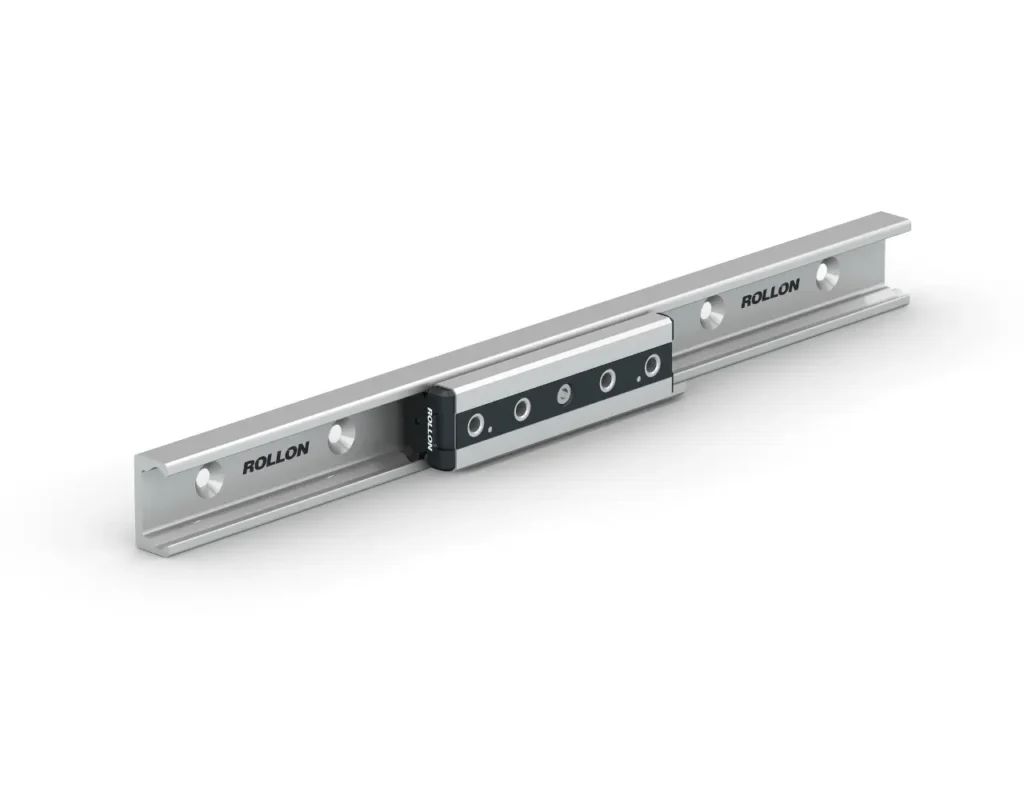
 Linear guides
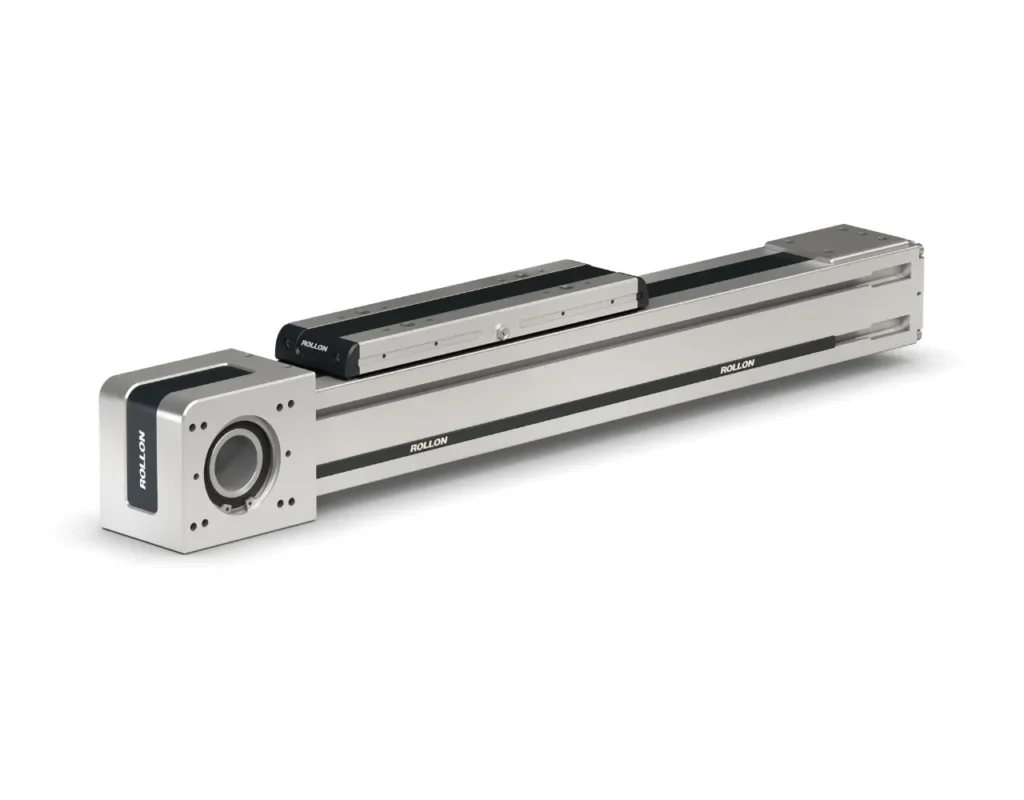 Linear actuators
 XP Xtrem Position
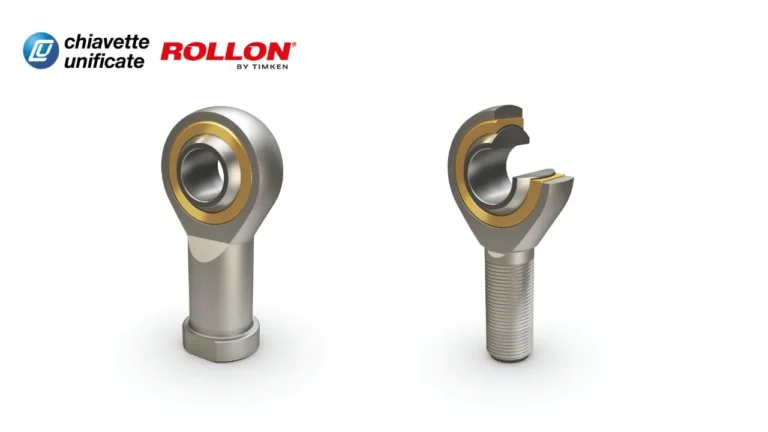
 Rod ends
 Telescopic rails
 Multi-axis
 XL Xtrem Load
 Spherical plain bearings
 Curved guides
 Robot transfer units
 XT Xtrem Transport
 Needle roller bearings
 Cam followers
 Circular systems
 Rollon RB
 Locknuts and rings
 Aerospace
 Building and Furniture
 Electronics
 Food & Beverage
 Healthcare
 Industrial machines
 Machine tool
 Material Handling
 Packaging
 Railway
 Robotics & Automation
 Special Vehicles



















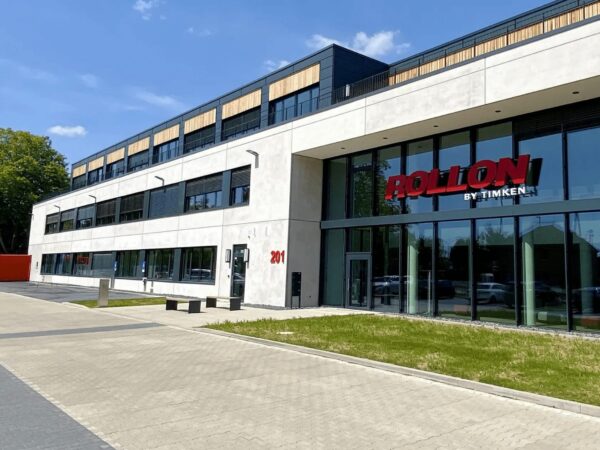
In the design of the new Princess Grace Hospital Centre in Monaco, Gruppo Pontiggia – commissioned by Vinci Construction Monaco – faced a construction application with the complexity and tolerances typical of mechanical engineering. Rollon Chiavette Unificate provided a tailor-made solution consisting of a Tesno® rod end and an adjustable double-threaded linkage, capable of compensating for misalignments and meeting structural strength requirements.
In the world of modern construction, architectural aesthetics are increasingly intertwined with complex technical requirements that demand cross-disciplinary skills, tailor-made solutions and a deep understanding of mechanics. It is precisely in this context that the collaboration between Gruppo Pontiggia and Rollon Chiavette Unificate was born, culminating in the creation of a key component for the new Princess Grace Hospital Centre in Monaco – a project promoted by the Department of Public Works of the Monegasque state. This project required not only design vision, but also the ability to tackle structural challenges with a mechanical engineering approach.
Always focused on innovation, Gruppo Pontiggia has been able to turn every market evolution into an opportunity for growth. This philosophy is rooted in a business history spanning more than sixty years.
The history of Gruppo Pontiggia
Founded in 1963 in the Pontiggia family’s garage, the company initially focused on metalwork. The turning point came in the 1980s with the arrival of Giuliano Pontiggia, the current General and Commercial Manager, who steered the company towards mechanics, automation and the manufacture of machine guards, in response to emerging safety regulations.
The 1990s marked structural and technological growth with the launch of ALLPLEX, a company specialising in mechanical processing, and the introduction of laser cutting and bending. Over time, the group expanded its services to include regulatory consulting through the company SLM, followed by the founding of FP Technology in 2012 for the assembly of components and plant parts, and Como Lighting, dedicated to lighting technology.
The consolidation of all activities at the Figino Serenza (Como, Italy) site has enabled the group to develop an integrated model capable of supporting customers from design to assembly, delivering finished machines and turnkey solutions across multiple sectors.
“Our ability to operate in multiple sectors and the experience we have gained in different fields over the years allow us to share know-how and deploy cross-disciplinary skills. This versatility sets us apart: the customer presents a need, and we are able to address it”, says Matteo Pontiggia, Owner and COO of Gruppo Pontiggia.
The key role of the construction sector
The construction sector became strategic for Gruppo Pontiggia in 2018 with its first prestigious project in the Principality of Monaco: the equivalent of 3 km of curved aluminium parapets, all made from solid material, which paved the way for a second project with stainless steel.
“Within a week, we had produced and presented a finished sample, earning Vinci Construction Monaco’s trust”, explains Pontiggia.
These projects became the calling card for an even greater challenge: building the metal structures for the new Centre Hospitalier Princesse Grace. What initially seemed to be a construction project quickly turned into a mechanical one, with all the associated technical complexities. To meet this challenge, Gruppo Pontiggia relied on the support of Rollon Chiavette Unificate, which developed a tailor-made solution that proved decisive to the project’s success.
Princess Grace Hospital Centre: where construction meets mechanics
“We developed the project based on construction concepts, but the strength and coupling requirements meant we had to rethink every element as if it were a mechanical design,” explains Giacomo Molteni, Design Engineer at Gruppo Pontiggia.
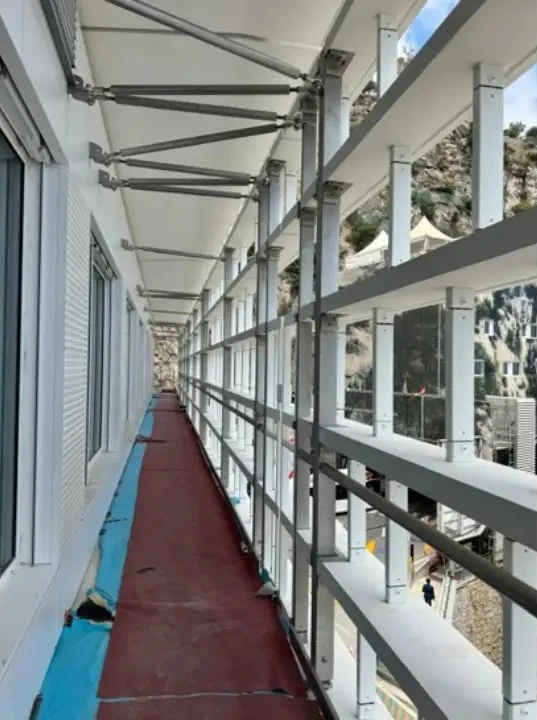
The hospital façade features a system of struts that also act as load-bearing columns, supported by linkages. Initially designed as rigid elements, these proved unfeasible.
“The first requirement was to identify a component that could adapt to different inclinations. Depending on the position of the columns and plates, each linkage was different and required specific adjustment. We had to compensate for misalignments, deal with constantly changing dimensions, and at the same time ensure the transmission of loads generated by the weight of the concrete and the structure itself,” continues Giacomo Molteni. “We therefore began to think in mechanical terms: in mechanics, there are various components capable of absorbing play and misalignments. Among these, rod ends proved to be the ideal solution for this application. It was at this point that we turned to Rollon.”
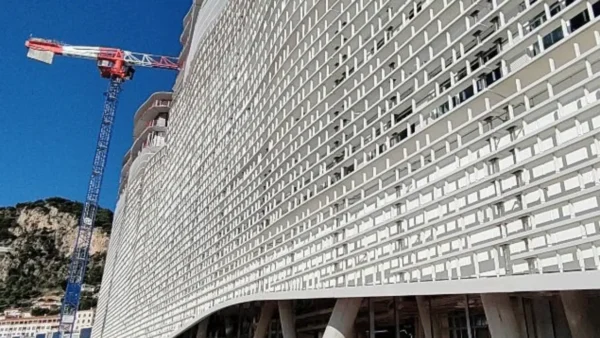
The hospital façade. © Vinci Construction Monaco
The proposed solution
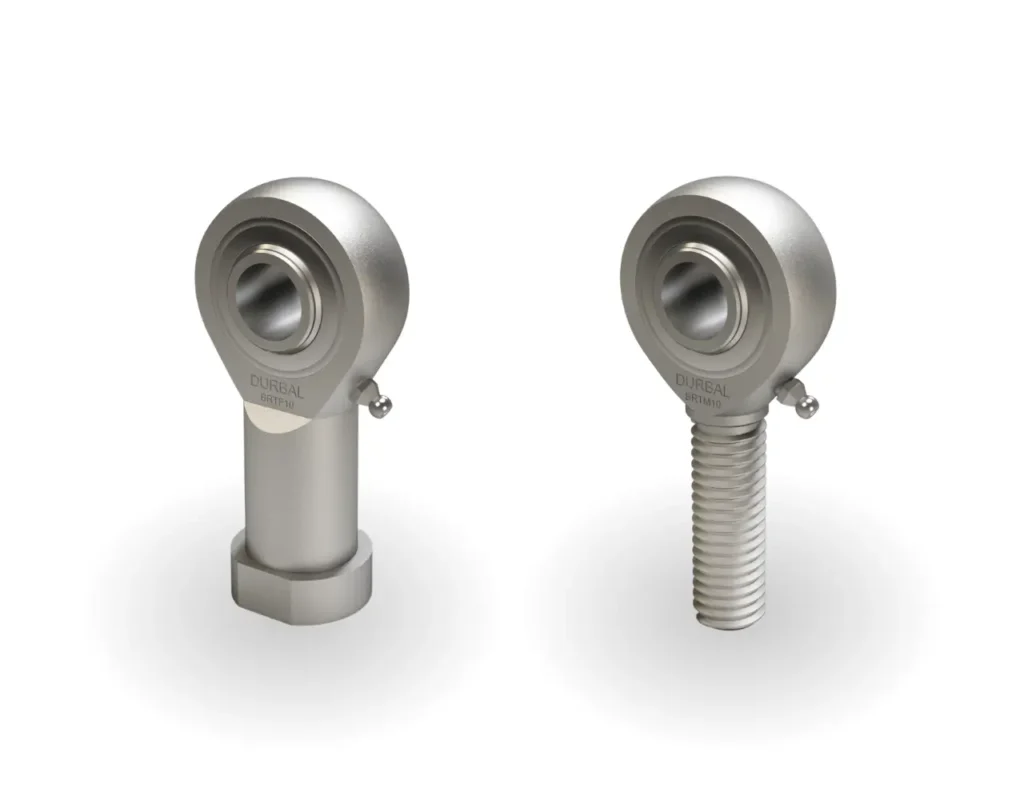
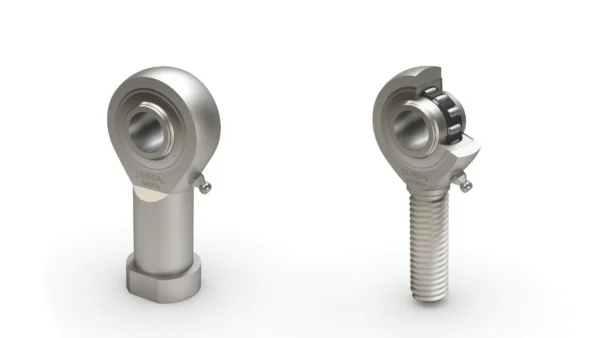
To address the complexity of the project, Rollon Chiavette Unificate proposed a customized Tesno® rod end. The product, originally designed with a 316 stainless steel moulded body and a brass bush, was re-engineered to meet fire resistance requirements. “The standard stainless-steel version of the Tesno® rod end is normally made with a body in AISI 304 and a bush in AISI 304 with bronze mesh as a support for the PTFE layer. However, this configuration did not meet the customer’s fire and corrosion resistance requirements. So, together with the Chiavette Unificate team, we developed a special version of the Tesno® rod end, made entirely of AISI 316, with a PTFE layer supported by AISI 304 mesh to ensure proper sliding,” explains Luca Carnevali, Area Sales Manager at Rollon.
“The rod end allowed us to compensate for misalignments, but we also had to face another challenge: the heights between the floors of the building varied, as did the number of concrete slabs,” continues Molteni. “They are denser on the lower floors and sparser on the upper floors, which generated thousands of different lengths.”
Therefore, the solution also included a double-threaded linkage (right-hand/left-hand), capable of adapting to different lengths. After carefully extracting data from the 3D architectural model, a series of standard lengths for the central body to which the rod ends would be attached was defined.
“The only element that would have allowed us to adjust the length was a double-threaded linkage. Together with the Chiavette Unificate team, we developed a central body with two welded and ground internal bushes, producing a finished piece without joints, with anti-loosening properties. The two Tesno® rod ends were completed with three nuts: two for adjustment and locking during installation, and a third to secure the threaded bar in the rod end,” explains Molteni.
The system has been subjected to tensile testing in the laboratory and certified by Chiavette Unificate. The result is a universal component, used throughout the project, with the only variable being the length of the central body.
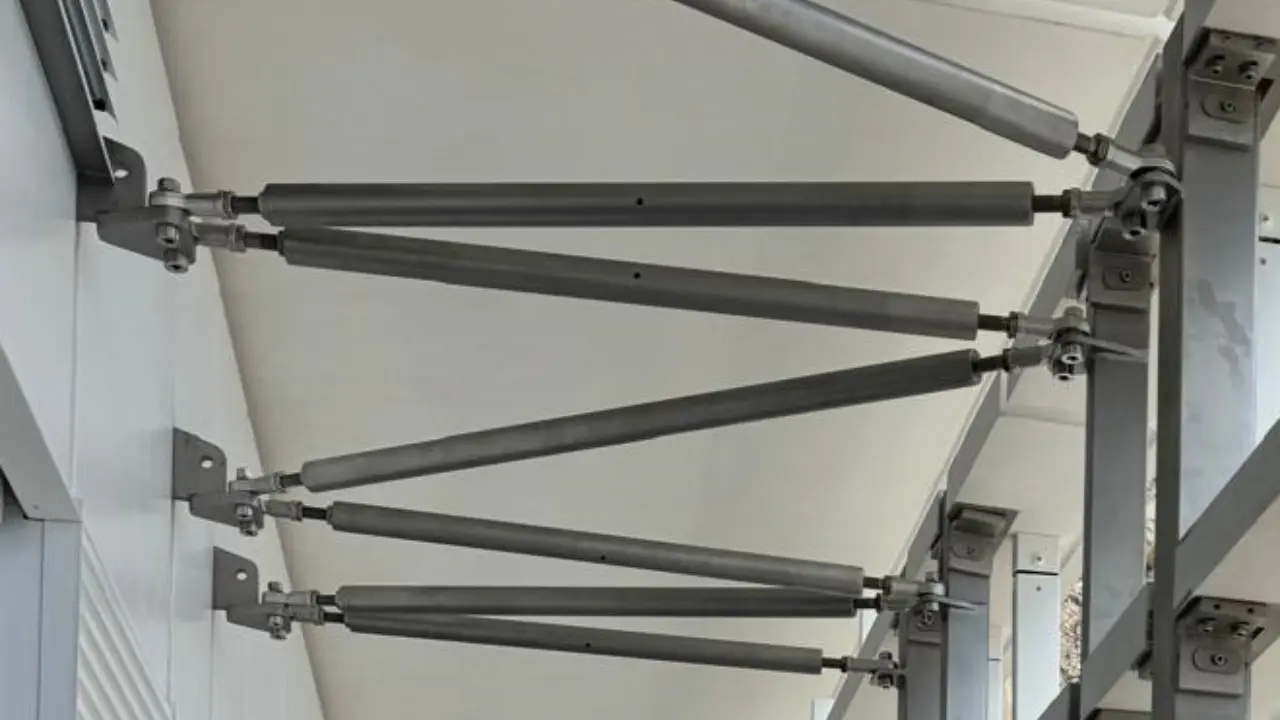
The solution proposed by Rollon Chiavette Unificate. © Rollon
A strategic collaboration
The CHPG is a project with significant impact, not only in architectural terms. The mechanical tolerances requested by Vinci Construction Monaco were in the hundredths of a millimetre, and any play could have compromised stability or caused structural noise. The project also involved the installation of anti-fall handrails, designed to ensure safety and future maintenance. Another challenge was the invisible markings: since they could not be external, an internal recess was created in the bushes to distinguish the left-hand threading.
“The quantity of parts produced was enormous: even after optimising the lengths, we are still talking about thousands of variants. It was a comprehensive and demanding project”, emphasises Molteni. “In such a complex project, the support of qualified suppliers is essential. We already knew Rollon, but their team stood out immediately: they were the only ones able to create a tailor-made solution, supporting us from design to delivery.”
A bridge between sectors, with a partner of excellence
This project demonstrates how mechanical expertise can also be decisive in high-end construction. Rollon Chiavette Unificate supplied a mechanical component redesigned for architectural applications, resolving structural and regulatory challenges.
“The architecture of Monaco is increasingly moving toward steel design and minimalism. Thanks to mechanical background and our collaboration with Rollon, we can face these new challenges with confidence. The construction industry will become increasingly central to our business: the know-how we have accumulated in sectors such as automation, robotics and machinery is now finding new applications, and Rollon will be a key partner in this future journey”, concludes Matteo Pontiggia.
Interested in learning more about our solutions or starting a new project together?