 Linear guides
 Linear actuators
 XP Xtrem Position
 Rod ends
 Telescopic rails
 Multi-axis
 XL Xtrem Load
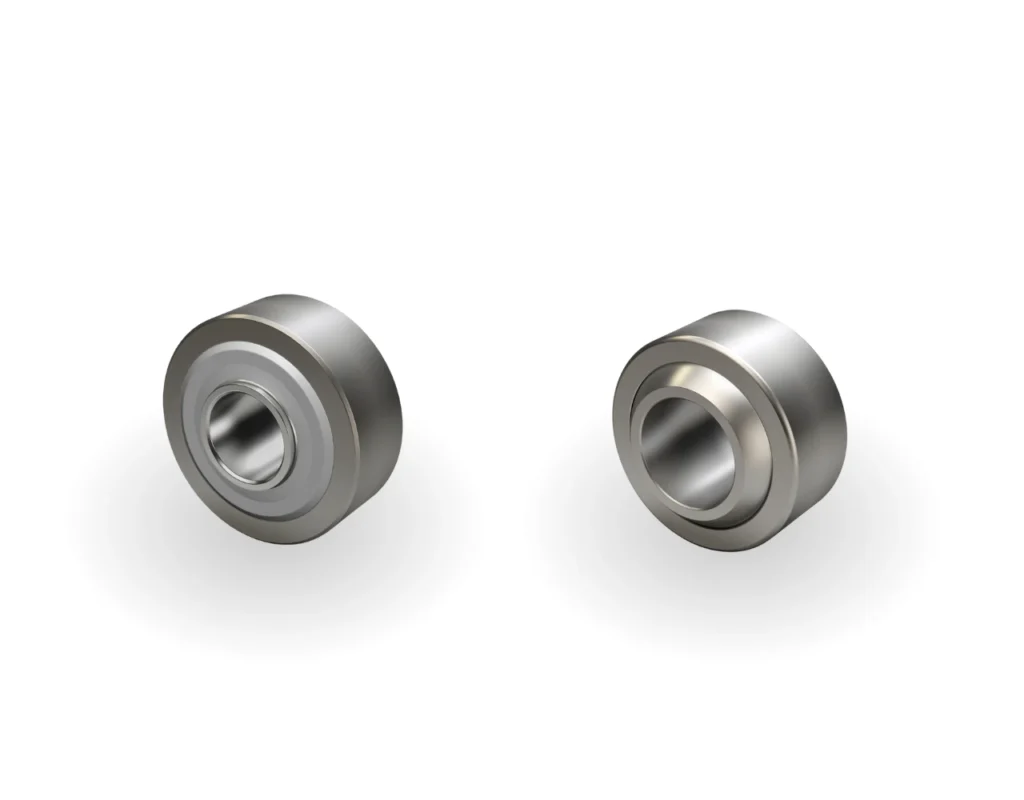 Spherical plain bearings
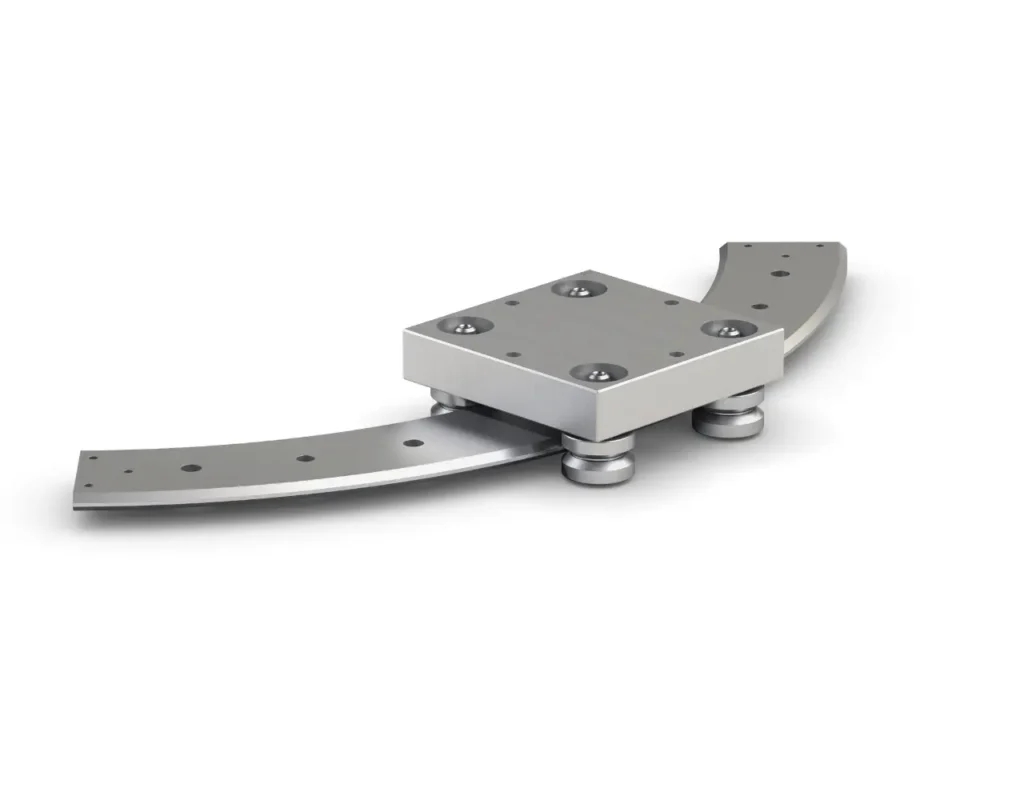 Curved guides
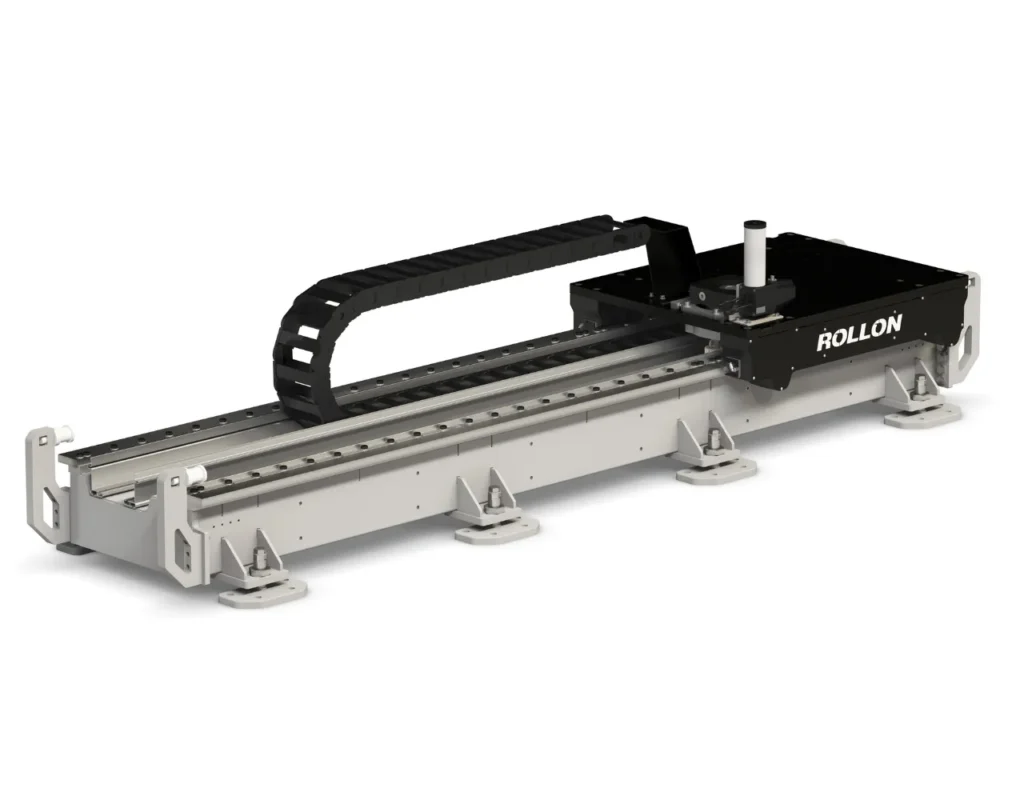 Robot transfer units
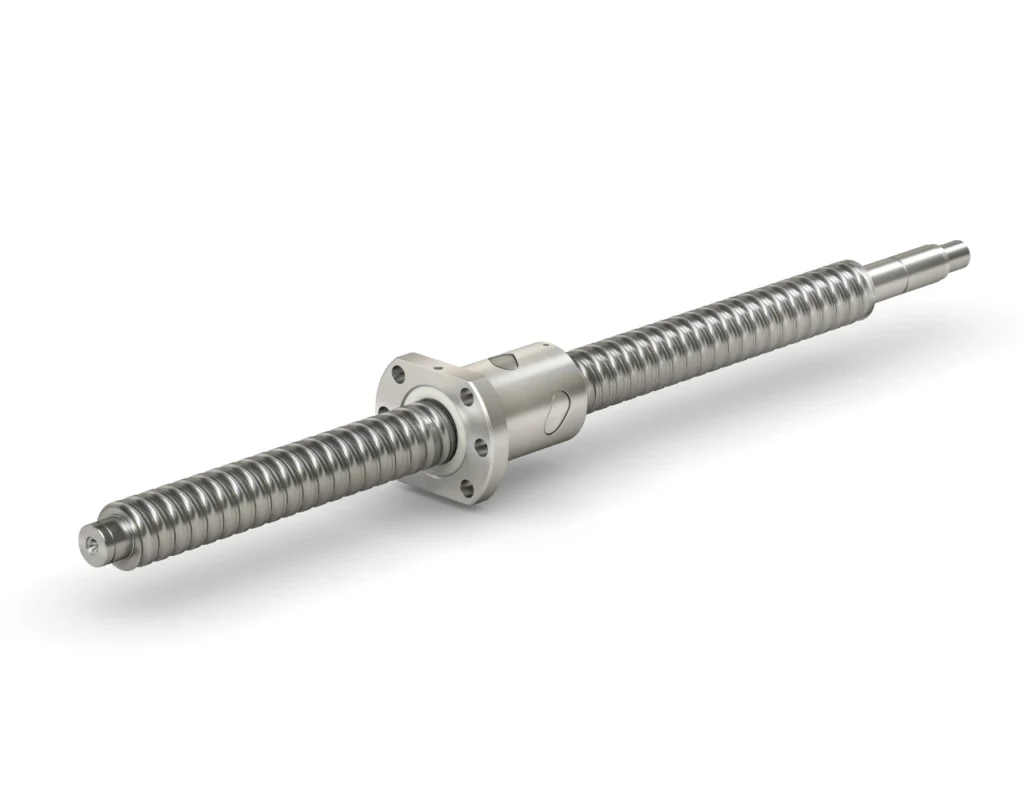 XT Xtrem Transport
 Needle roller bearings
 Cam followers
 Circular systems
 Rollon RB
 Locknuts and rings
 Aerospace
 Building and Furniture
 Electronics
 Food & Beverage
 Healthcare
 Industrial machines
 Machine tool
 Material Handling
 Packaging
 Railway
 Robotics & Automation
 Special Vehicles


























The automated guided vehicle has become one of the most transformative technologies in modern intralogistics, enabling warehouses, manufacturing facilities, and distribution centers to move materials autonomously, safely, and at a scale that manual handling cannot achieve. As Indian industry accelerates its adoption of automation across automotive, e-commerce, pharmaceutical, and food sectors, understanding how AGV systems work is essential knowledge for logistics and engineering professionals.
What is an AGV system? Types and Navigation Technologies
An AGV system is a self-propelled materials handling platform that navigates through a facility without continuous human intervention, following defined paths or making autonomous routing decisions to transport loads between pick-up and drop-off stations. The term encompasses a broad family of platforms, from simple tow tractors that follow a magnetic tape track to sophisticated load carriers capable of navigating dynamically in environments shared with human workers.
The navigation technology used by an automated guided vehicle largely determines its operational flexibility and installation complexity. Magnetic track guidance, one of the earliest and still widely deployed methods, relies on a physical guide path embedded in or applied to the floor, offering high positional reliability at low cost but limited route flexibility. Laser triangulation systems use fixed reflector targets around the facility perimeter to determine the vehicle’s position, enabling more flexible path programming without physical markers. Natural feature navigation and simultaneous localization and mapping, commonly abbreviated to SLAM, allow the AGV robot to build and update a map of its environment in real time, navigating by reference to permanent structural features rather than installed infrastructure. This represents the most flexible approach to AGV system navigation, particularly in facilities where layouts change frequently.
AGV vs AMR: Differences and When to Use Each
The AMR vs AGV distinction is one of the most frequently discussed topics among intralogistics engineers evaluating autonomous mobile platforms. An AGV system in its classical definition follows fixed or semi-fixed paths and relies on infrastructure to navigate. An autonomous mobile robot, by contrast, uses onboard sensors and real-time environment mapping to navigate dynamically, making independent routing decisions and adapting to obstacles without human intervention.
In practice, the boundary between the two categories has blurred considerably as AGV robot platforms have adopted increasingly sophisticated navigation systems. For the purposes of industrial selection, the relevant distinction is operational: if a facility has a stable, predictable material flow with defined routes and fixed pick-up and drop-off points, a conventional AGV system typically offers a more cost-effective and reliable solution. If the facility layout changes frequently, or if the vehicle must share space dynamically with human workers and other vehicles, the greater flexibility of an AMR justifies the higher investment.
Key Challenges: Payload Capacity, Positioning Accuracy and Integration
The engineering challenges facing AGV system designers and system integrators extend well beyond navigation. Payload capacity must account for not only the static weight of the goods but also the dynamic forces generated during acceleration, braking, and cornering. Exceeding the rated payload of any component in the load path, including the linear guide rail assemblies used in onboard load-handling mechanisms, will cause accelerated wear and potential structural failure.
Positioning accuracy at the point of load pickup and deposit is a separate but equally critical requirement. An automated guided vehicle that navigates accurately to within ±10 mm of a target station may still fail to complete the load transfer reliably if its onboard load-handling mechanism cannot compensate for this residual navigation error. The interface between the vehicle’s navigation accuracy and its load-handling precision is a system integration challenge that requires careful attention to the design and specification of the motion components involved.
Load Pickup and Transfer as the Critical Bottleneck
In the majority of AGV system, the load pickup and transfer mechanism is the primary source of operational downtime and accuracy limitations. A lifting platform that flexes under load, a telescoping fork that binds under lateral forces, or a conveyor transfer deck that loses positional reference after repeated cycles will all degrade system throughput regardless of how reliably the vehicle navigates. The linear guide components used in these mechanisms must therefore be specified to handle not only the rated payload but also the misalignment forces and dynamic loads that arise in real operating conditions, including the floor surface irregularities and slight positional variations that are inevitable in any warehouse or manufacturing facility.
The Role of Linear Guides and Telescopic Slides in AGV Systems
Within an AGV system, Linear Guides and Telescopic Slides appear in several critical subsystems. Lifting columns use linear guide rails to ensure that the load platform rises and descends vertically without lateral deviation, which would otherwise cause the load to shift on its support surface. Transfer mechanisms depend on Linear Guides to maintain alignment between the vehicle’s onboard deck and the stationary rack, conveyor, or workstation onto which the load is being deposited.
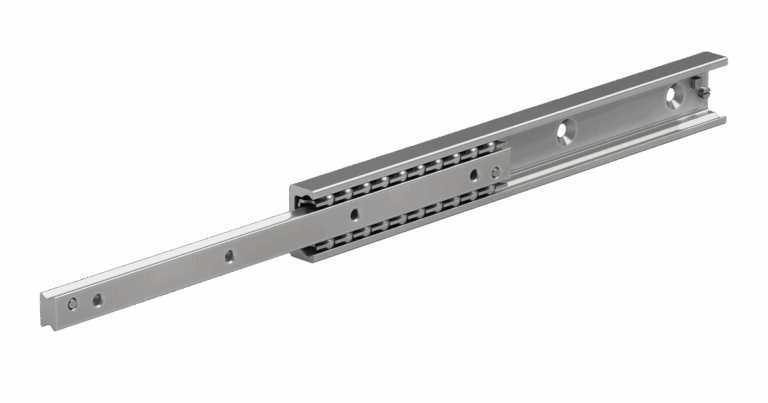
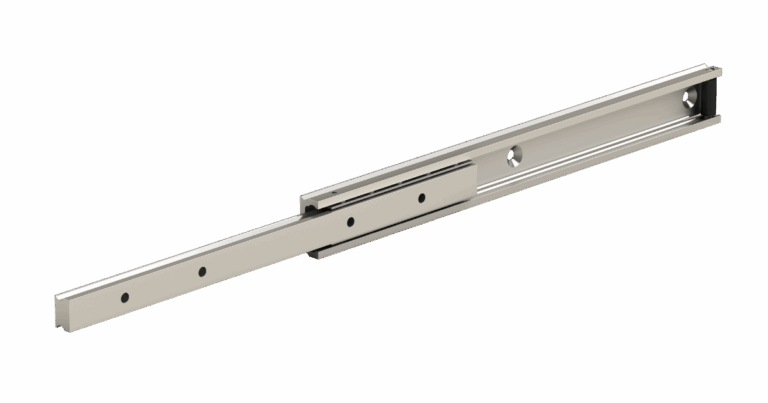
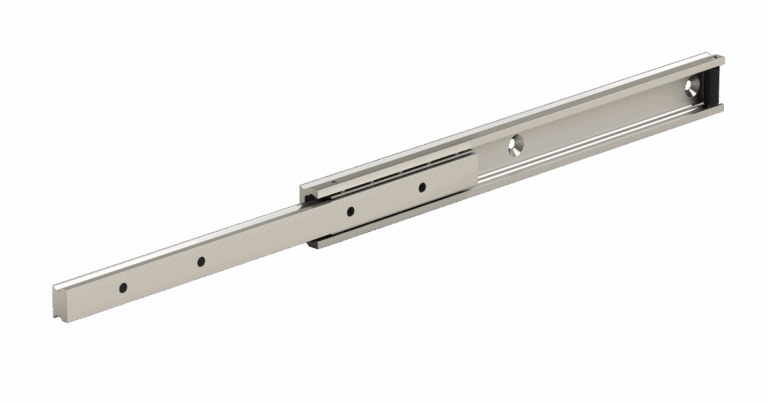
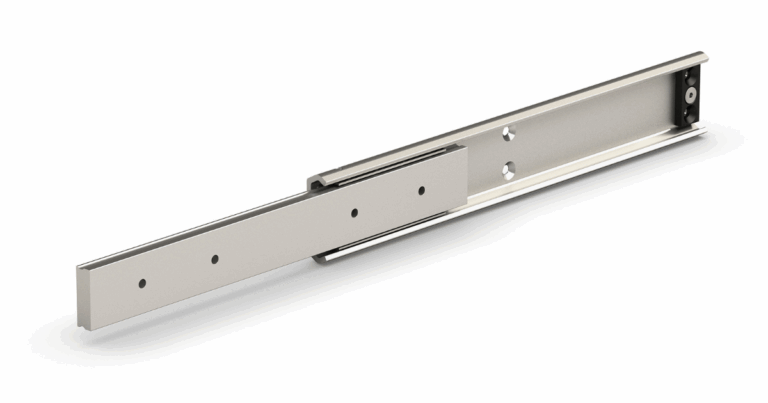
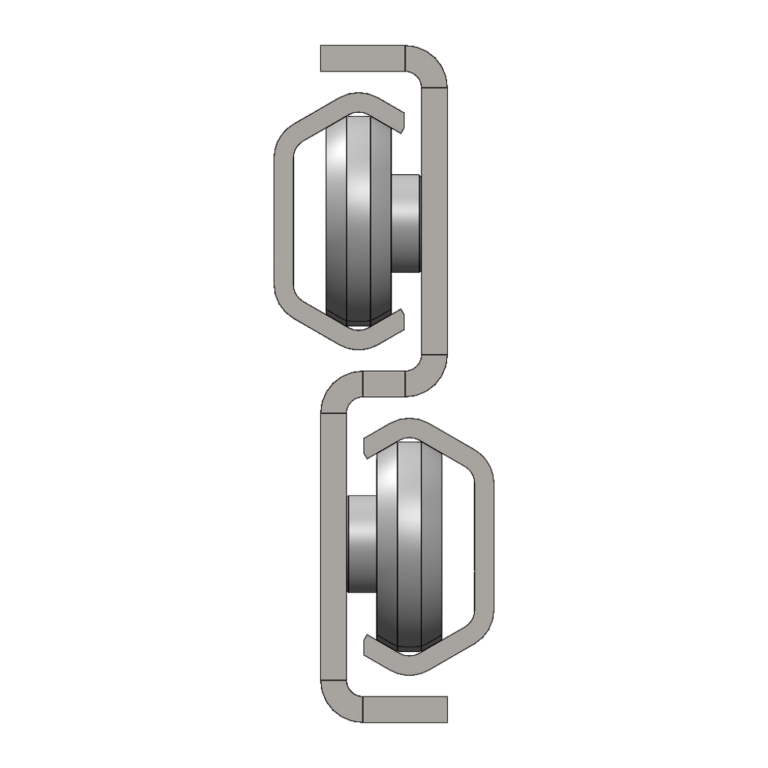
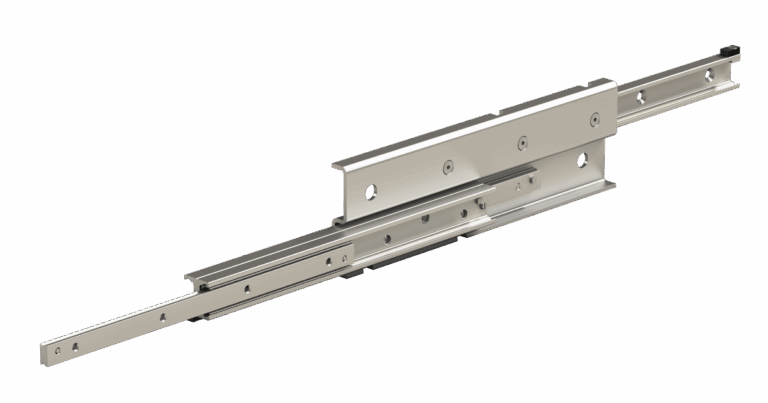
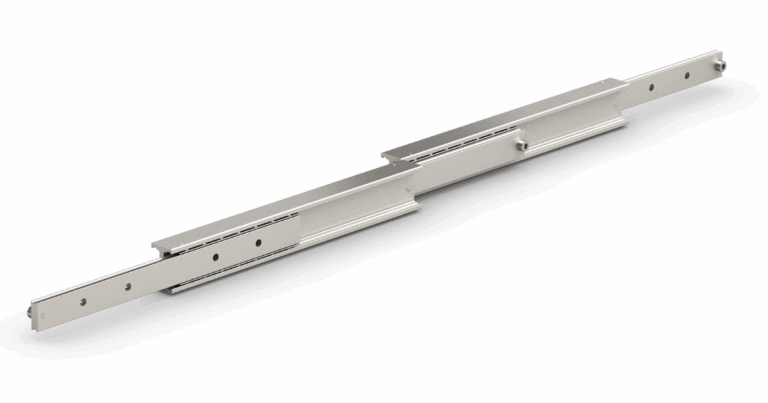
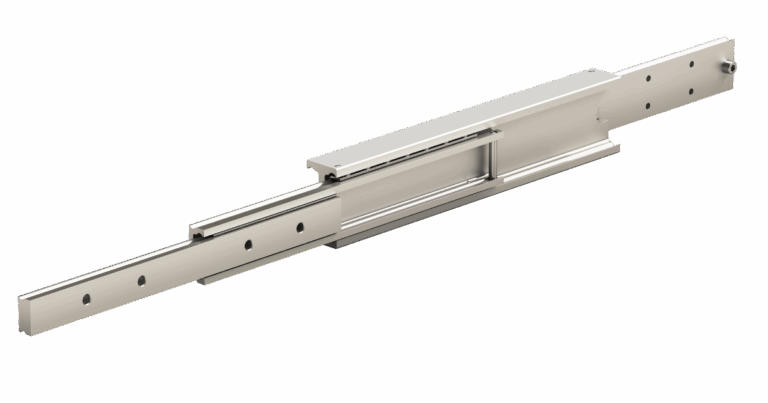
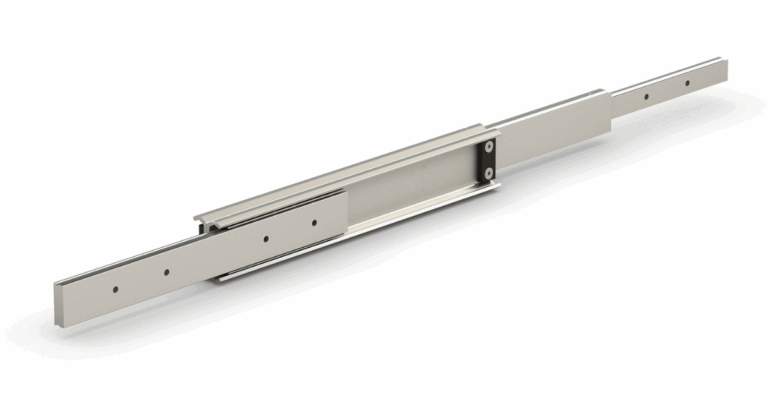
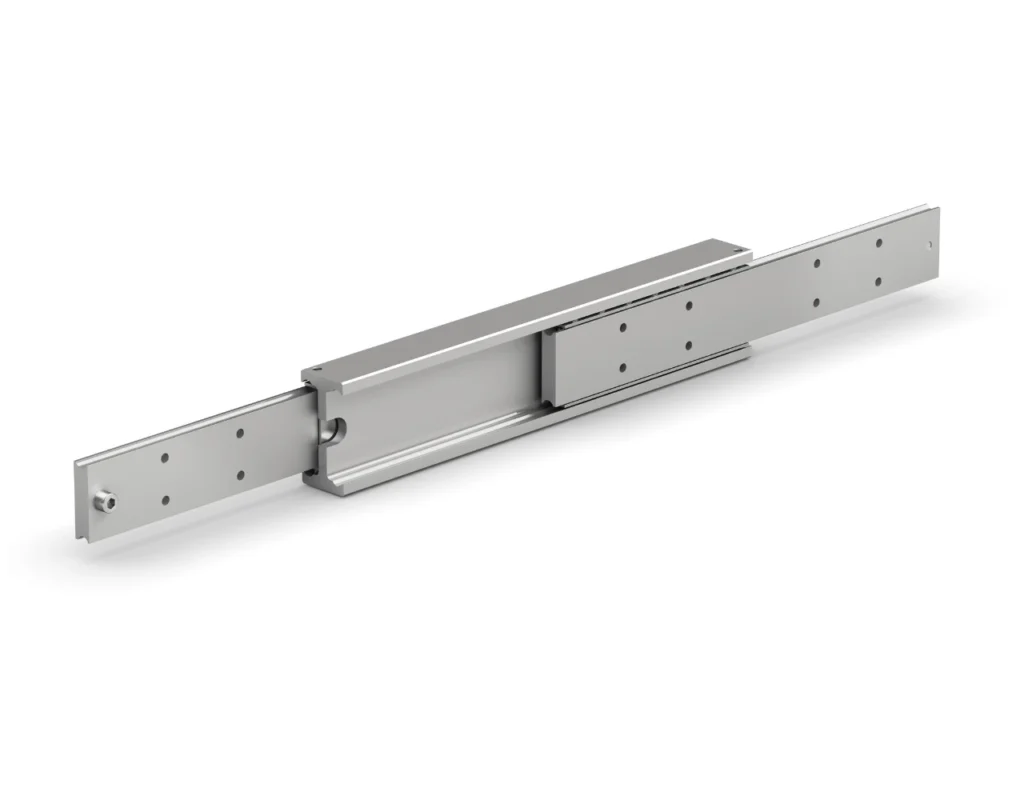
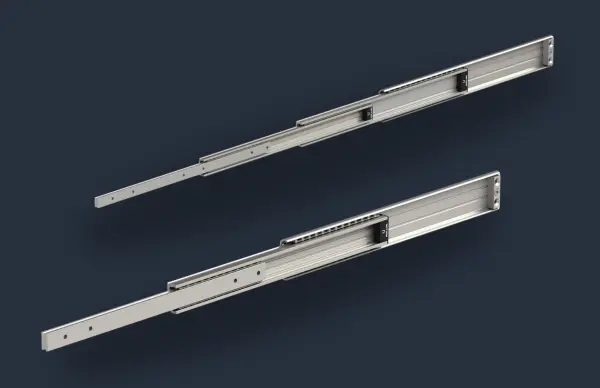
Telescopic fork systems, used extensively in automated guided vehicle designs for pallet handling and racking access, rely on Telescopic Slides to extend the fork arms laterally beyond the vehicle body width to access storage locations. The telescopic rail assembly must support the full payload in a cantilevered configuration while maintaining precise alignment throughout the extension travel. Any play or deflection in the telescopic guides will cause the fork tips to deviate from their target position, leading to failed insertions, pallet damage, or racking impact.
Rollon Solutions for Reliable Load Handling
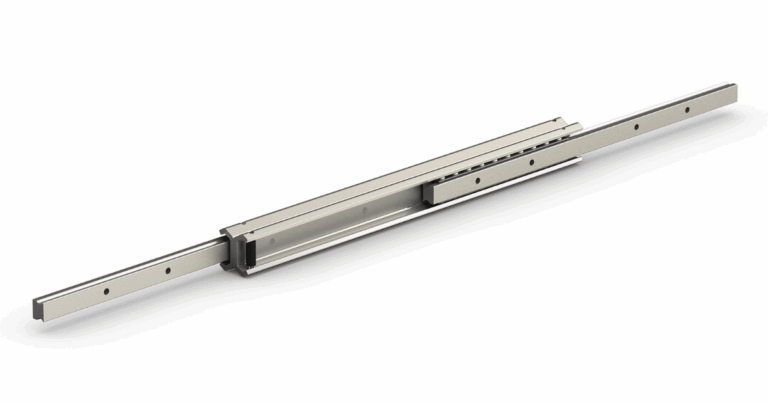
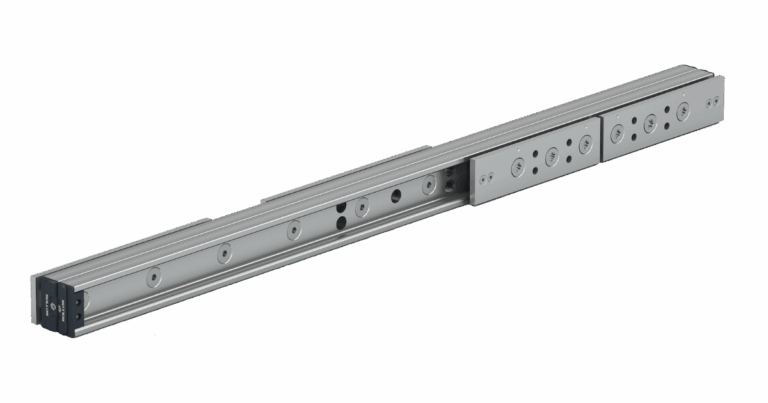
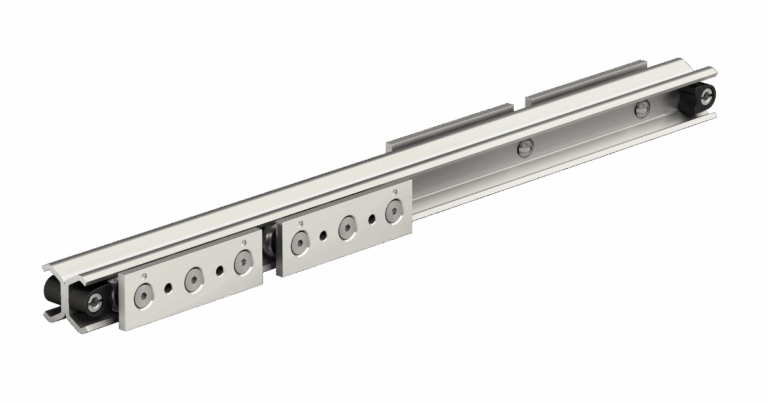
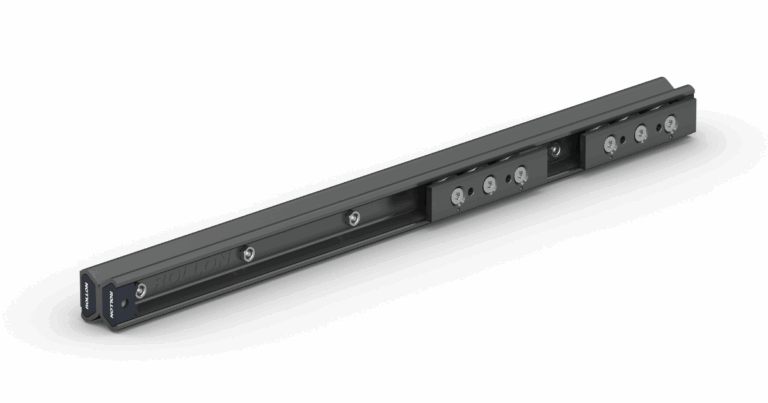
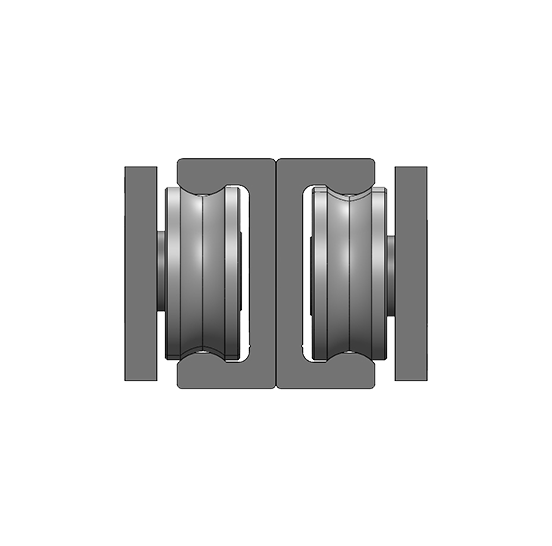
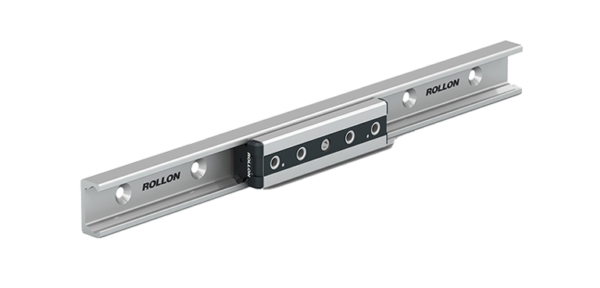
Rollon’s Linear Guides portfolio offers engineers a comprehensive range of profiled rail systems suited to the varied load-handling requirements of automated guided vehicle design. The Compact Rail system uses roller-based carriages running on a three-row profiled rail, providing high load capacity relative to its cross-section and excellent tolerance to misalignment, a particularly valuable characteristic in AGV lifting and transfer mechanisms where the guidance must absorb positional variation without binding.
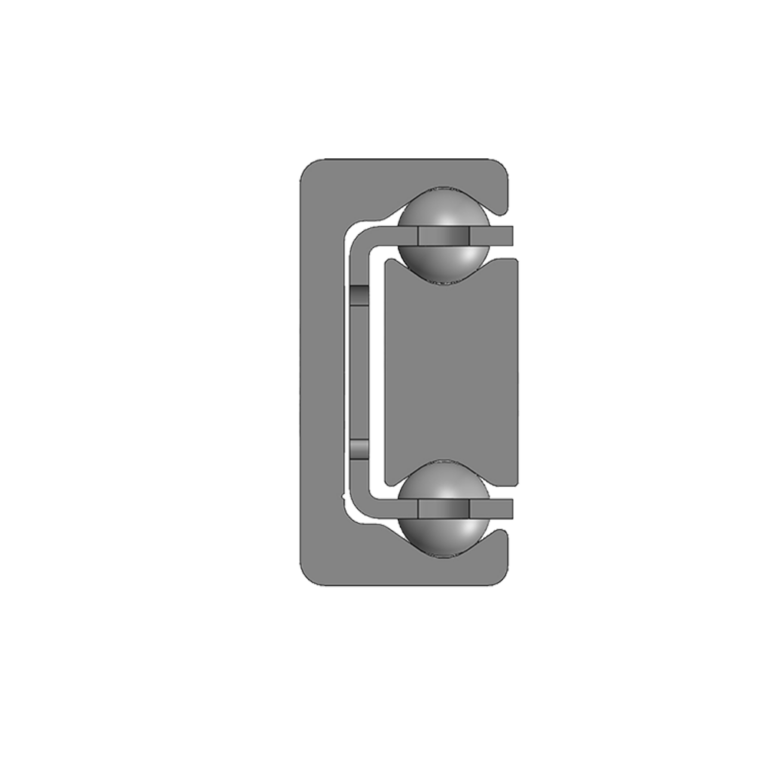
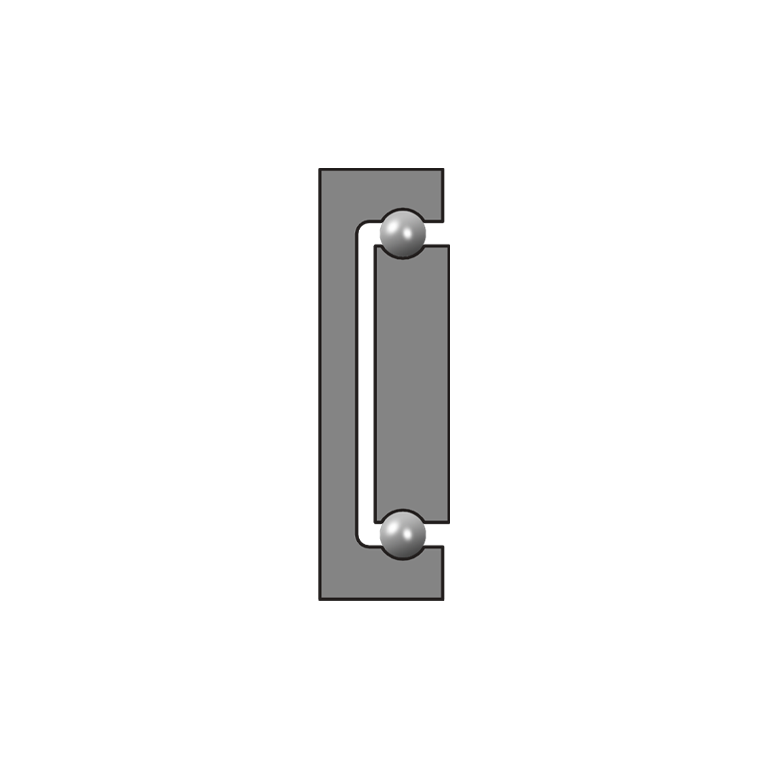
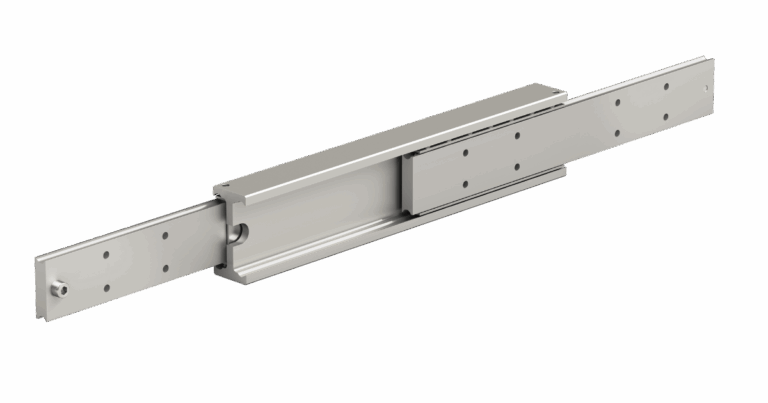
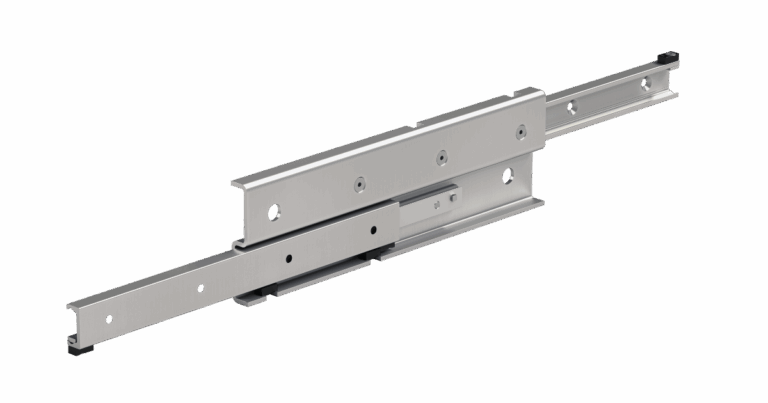
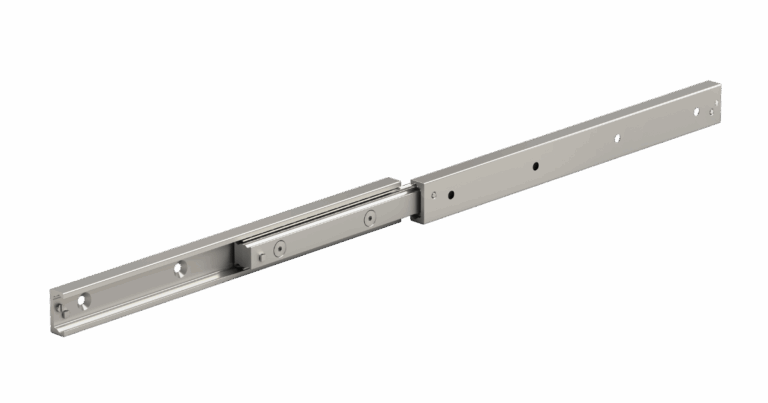
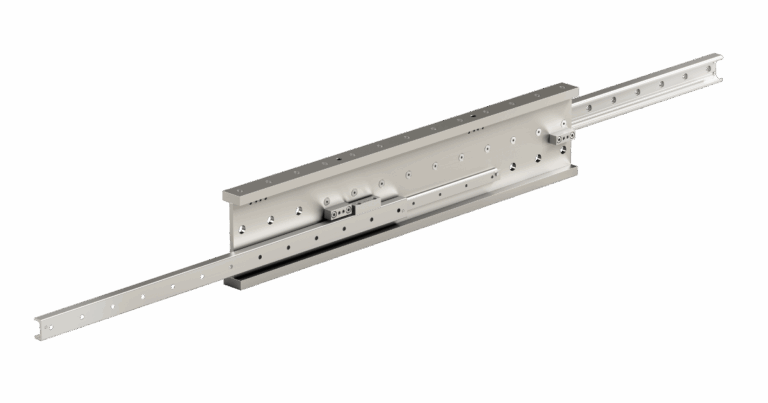
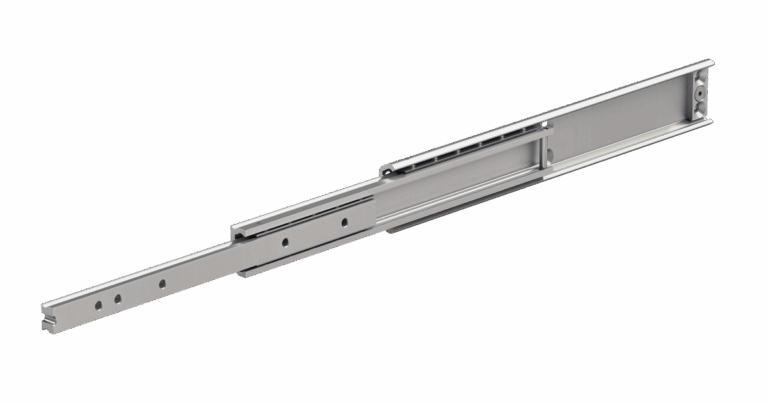
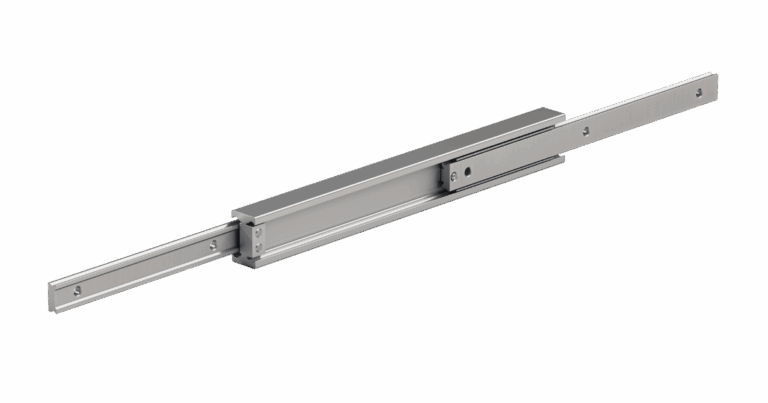
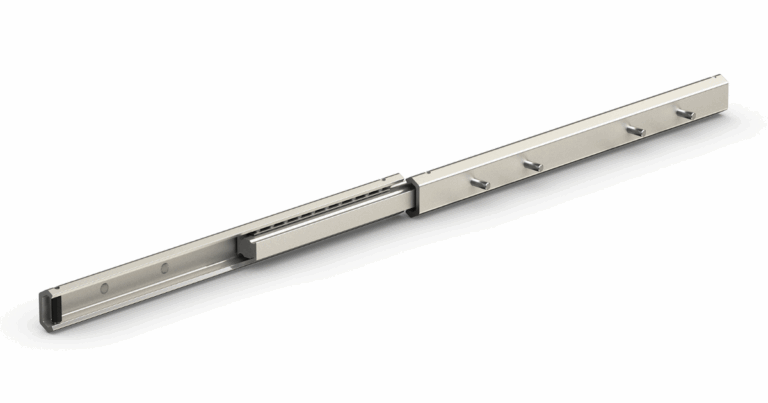
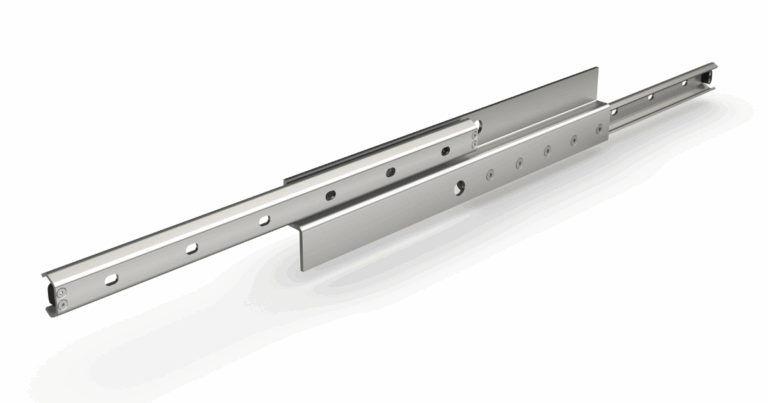
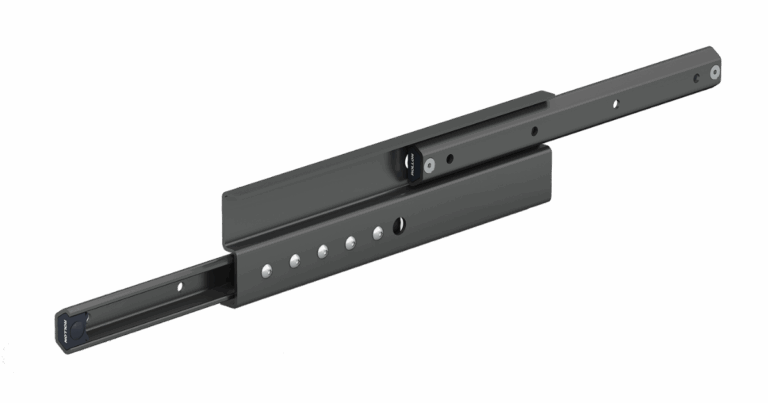
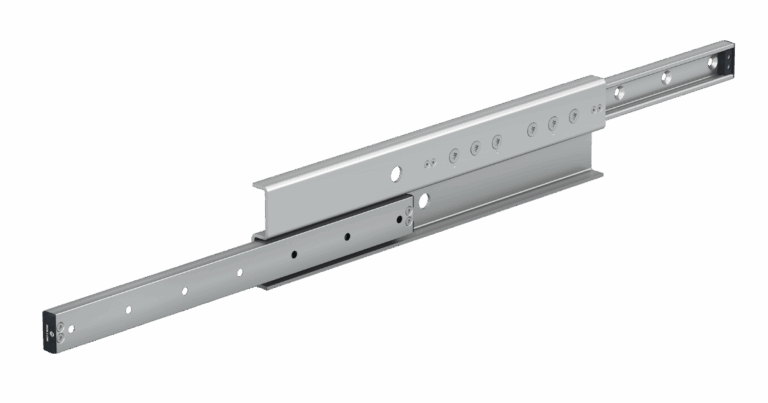
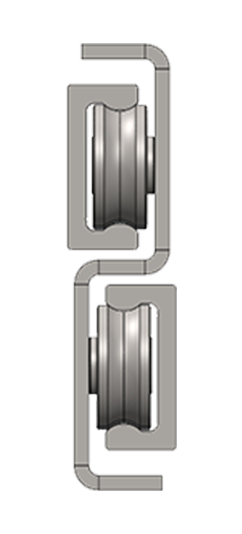
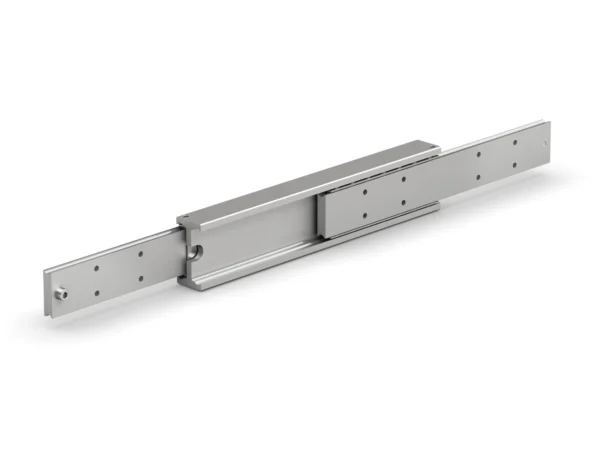
For telescopic fork and drawer applications, Rollon’s Telescopic Slides range provides high-rigidity, full-extension and over-extension configurations in both standard and heavy duty telescopic rail variants. The heavy-duty versions are engineered to maintain precise alignment under the full cantilever payload of an extended fork assembly, preventing the tip deflection that causes mislocation in automated racking systems. Surface treatment options including zinc-nickel plating and anodizing ensure corrosion resistance in the humid and chemically active environments common in pharmaceutical and food processing AGV system applications.
Across both product families, Rollon’s engineering support enables system designers to select linear guide rails and telescopic guides that are correctly rated for the combined static, dynamic, and misalignment loads of their specific automated guided vehicle application. This reduces the risk of premature wear, simplifies maintenance planning, and supports the extended operational availability that continuous intralogistics operations require.
Industry Applications in India: Automotive, E-Commerce, Pharma and Food
Indian automotive manufacturing has been among the earliest and most committed adopters of AGV system technology, driven by the need to move heavy components reliably between production stations across large factory floors. In this context, the load-handling mechanism of the AGV robot must manage substantial payloads across extended operating cycles, placing demanding requirements on the Linear Guides and lifting components of the vehicle. Rollon’s high-capacity linear guide rail systems provide the stiffness and moment load ratings required to maintain alignment accuracy across the full payload range of automotive AGV applications.
In Indian e-commerce and distribution, the explosive growth of fulfilment operations has created strong demand for AGV systems capable of navigating dense storage environments and handling a wide variety of packaging formats at high throughput rates. The automated guided vehicle navigation requirements of these facilities favour AMR-type platforms with sophisticated onboard sensing. The Compact Rail guidance system’s combination of high load capacity, misalignment tolerance, and compact cross-section makes it particularly well suited to the space-constrained load-handling mechanisms of these vehicles.
In pharmaceutical manufacturing and distribution, the requirements for AGV system extend beyond mechanical performance to encompass cleanliness, material compatibility, and regulatory compliance. Rollon’s stainless steel and anodised surface treatment options for both Linear Guides and Telescopic Slides address these requirements, enabling AGV load-handling mechanisms to be validated for use in controlled environments. In food processing and cold chain logistics, the same surface treatment options provide resistance to the aggressive cleaning agents and temperature cycling that AGV system in these sectors must routinely withstand.
FAQs
What is an automated guided vehicle and how does it work?
An automated guided vehicle is a self-propelled materials handling platform that transports loads through a facility without continuous human guidance, using a navigation system to follow defined paths or make autonomous routing decisions. The vehicle receives transport tasks from a fleet management system, navigates to the designated pick-up location using its chosen AGV system navigation technology, engages the load using its onboard handling mechanism, and transports it to the target station before returning for the next task. The reliability of the load engagement and release cycle depends on the precision of the Linear Guides and Telescopic Slides used in the vehicle’s load-handling subsystem, making motion component selection a critical factor in overall system performance.
What is the difference between an AGV and an AMR?
A conventional automated guided vehicle navigates by following fixed or semi-fixed infrastructure and follows predetermined routes that must be reconfigured when the facility layout changes. An autonomous mobile robot uses onboard sensors and real-time environment mapping to navigate dynamically, adapting its route in response to obstacles and layout changes without physical infrastructure modification. In the AMR vs AGV comparison, AGVs are generally better suited to stable, high-throughput environments with defined material flows, while AMRs offer greater flexibility in dynamic or frequently changing facilities. Both platform types rely on high-quality Linear Guides and Telescopic Slides in their load-handling mechanisms to achieve reliable, accurate load transfer.
How do linear guides and telescopic slides improve AGV load handling?
High-performance Linear Guides improve AGV system load handling by providing stiff, low-friction guidance for lifting columns, transfer decks, and fork alignment mechanisms, ensuring that the load platform or fork assembly reaches its intended position accurately despite the dynamic forces and floor surface variations encountered in operation. Telescopic Slides enable fork arms and drawer mechanisms to extend fully beyond the vehicle body to access storage locations, while maintaining the alignment precision needed to prevent mislocation in automated racking systems. Rollon’s Compact Rail system and heavy duty telescopic rail variants are engineered specifically for the misalignment tolerance, load capacity, and contamination resistance required in AGV robot applications across Indian industrial environments.
Which industries in India benefit most from AGV automation?
Automotive manufacturing, e-commerce fulfilment, pharmaceutical production, and food processing are among the sectors in India that have seen the greatest operational benefits from AGV system adoption. Automotive facilities benefit from the ability of AGV robots to move heavy components reliably between production stations without the ergonomic risks and variability of manual handling. E-commerce distribution centers use AGV systems to increase order throughput and reduce pick cycle times in dense storage environments. Pharmaceutical and food facilities benefit from the clean, consistent material flow that AGV system provide, alongside the compliance-friendly audit trail that automated fleet management systems generate.