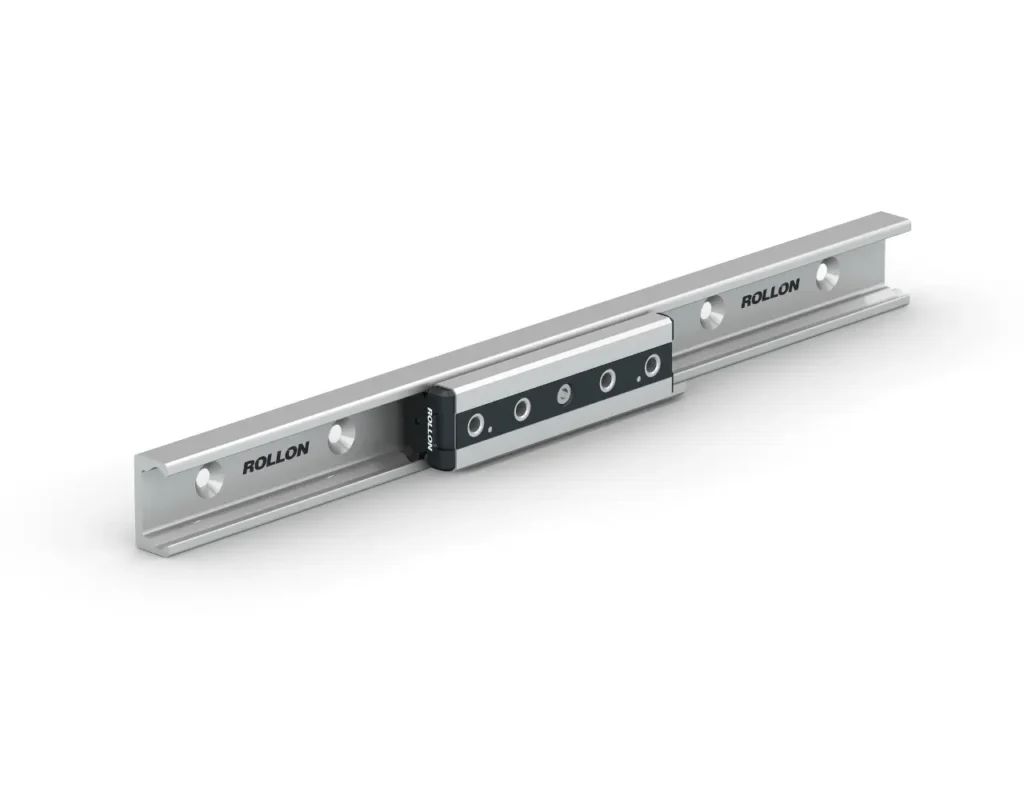
 Linear guides
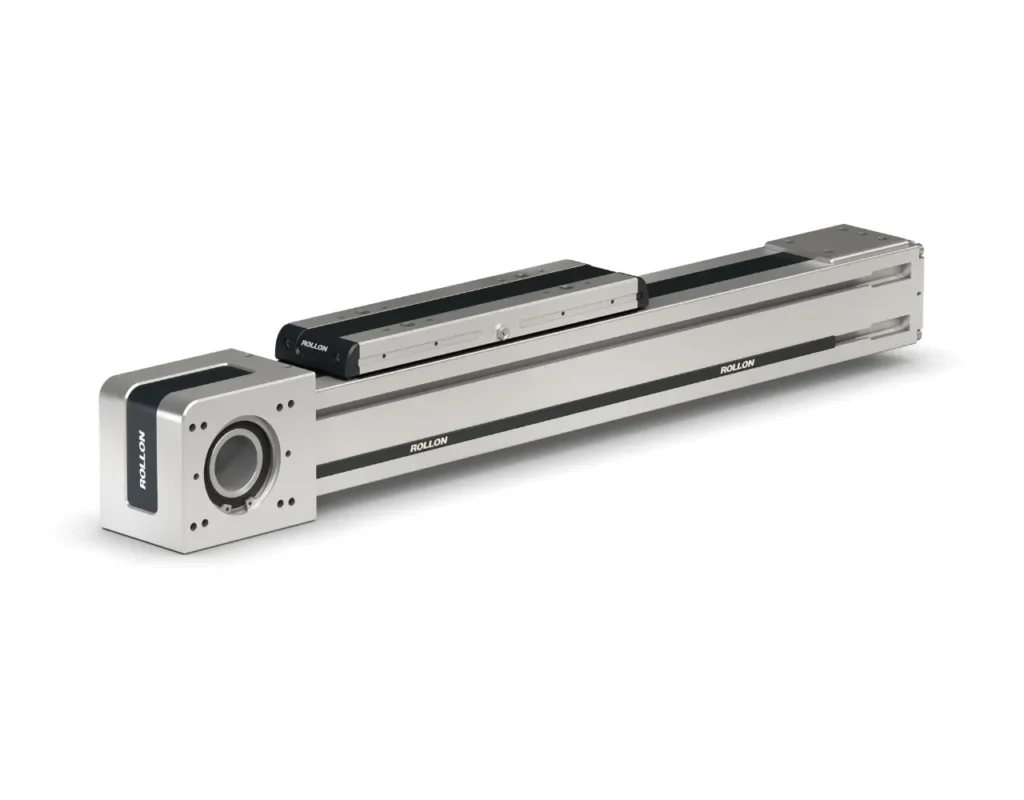 Linear actuators
 XP Xtrem Position
 Rod ends
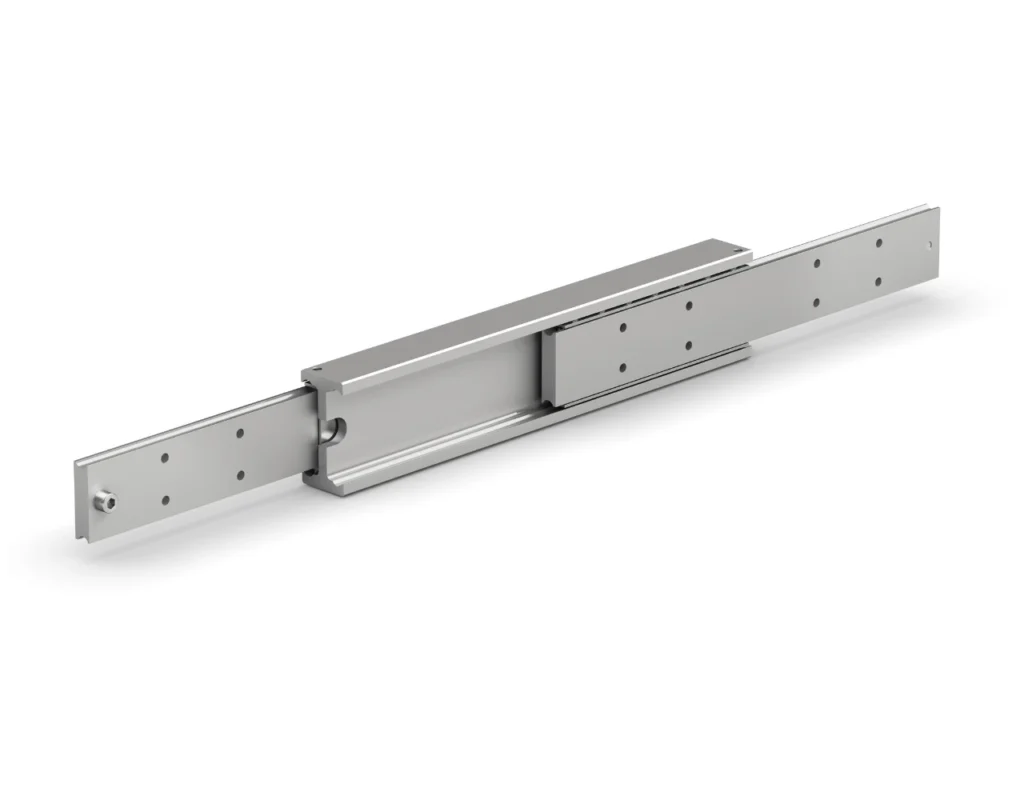 Telescopic rails
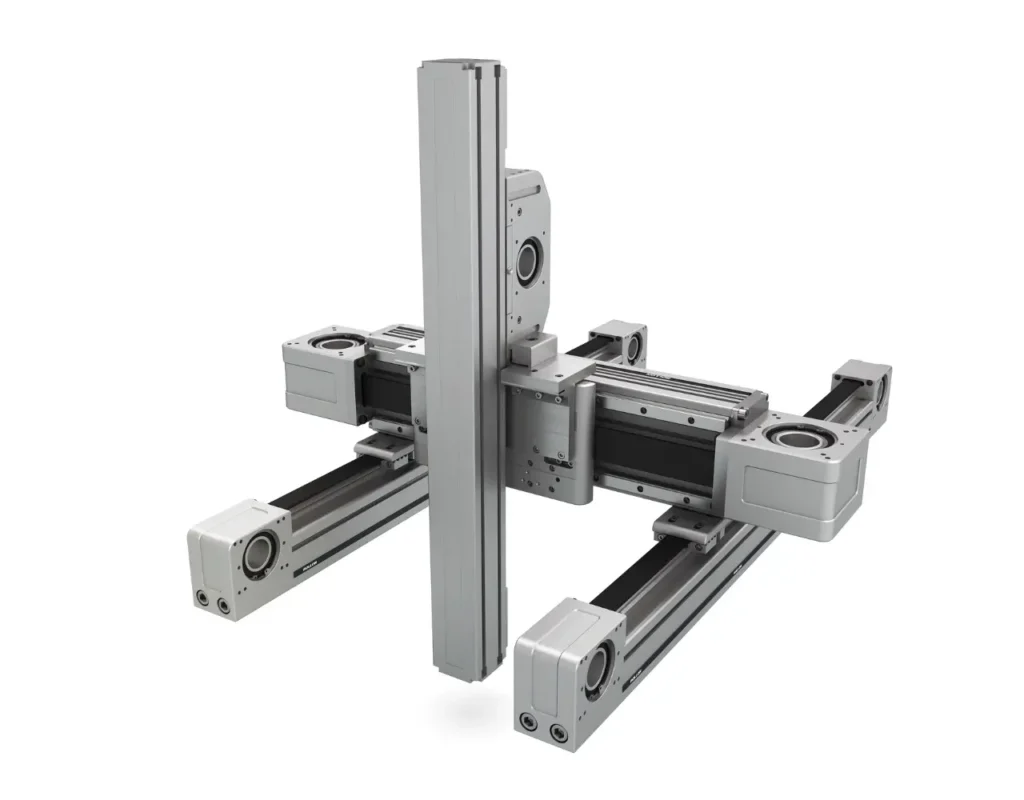 Multi-axis
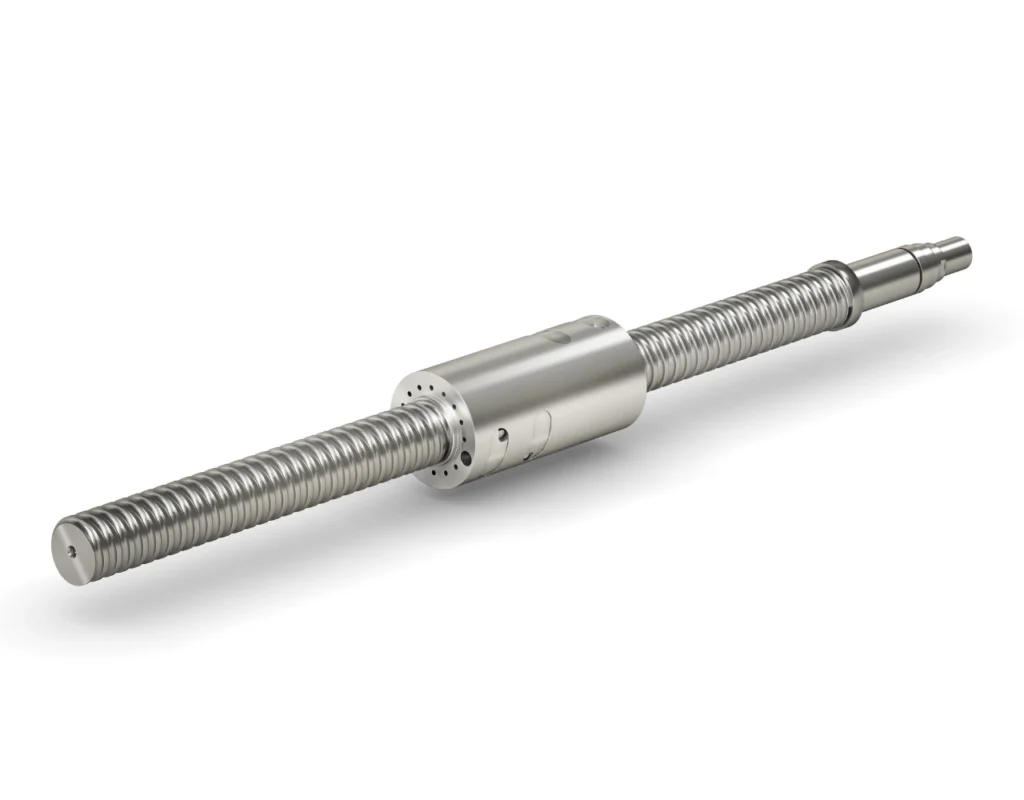 XL Xtrem Load
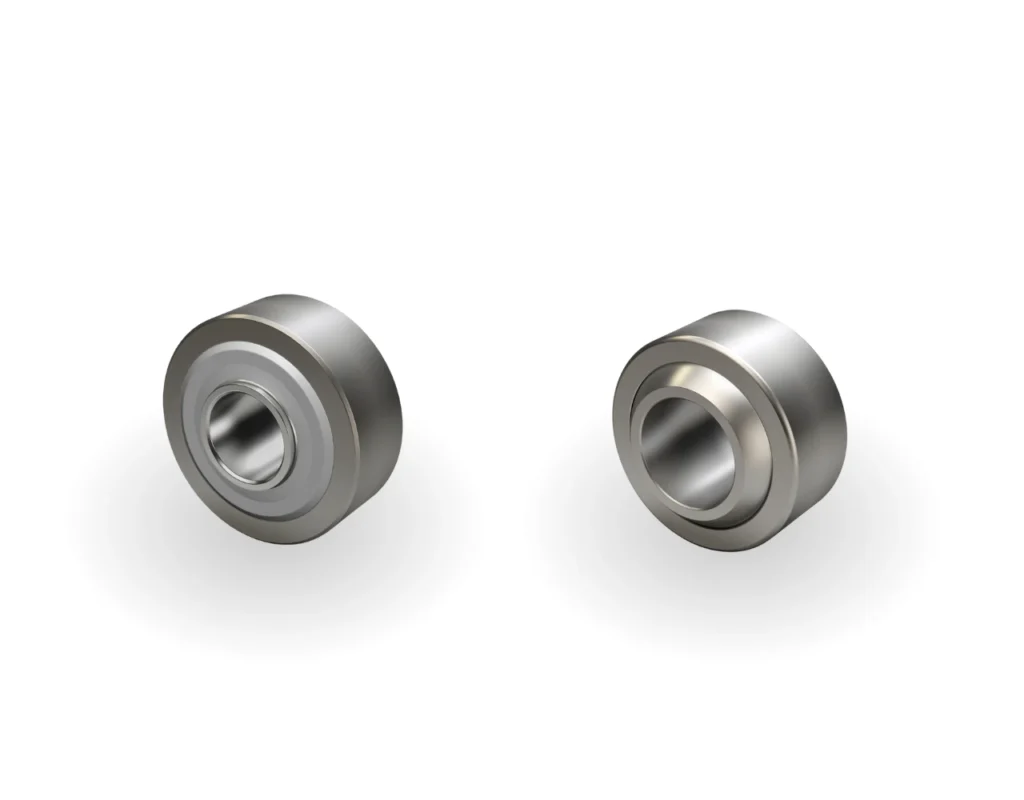 Spherical plain bearings
 Curved guides
 Robot transfer units
 XT Xtrem Transport
 Needle roller bearings
 Cam followers
 Circular systems
 Rollon RB
 Locknuts and rings
 Aerospace
 Building and Furniture
 Electronics
 Food & Beverage
 Healthcare
 Industrial machines
 Machine tool
 Material Handling
 Packaging
 Railway
 Robotics & Automation
 Special Vehicles


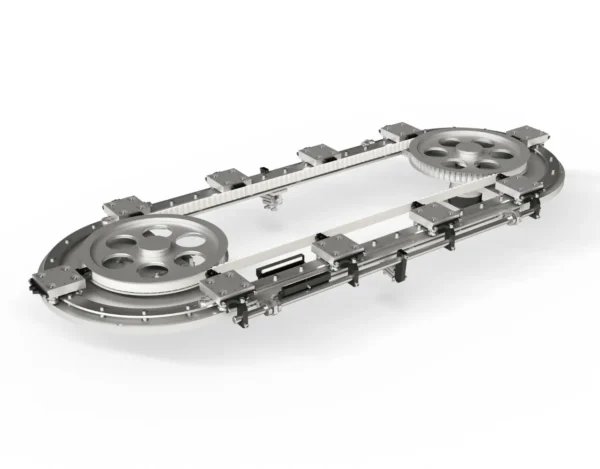


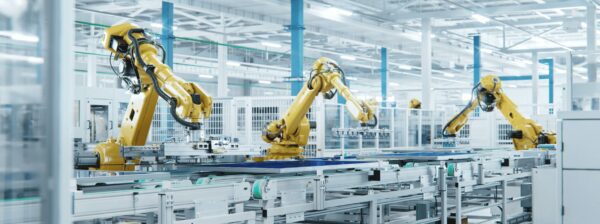


In factories, the question is how to make robots them work smarter and in tighter spaces. That is where a wall mounted robot on a seventh axis robot track becomes interesting. Instead of placing the robot on the floor and letting it occupy valuable production area, the robot is suspended from an elevated robot track system, moving along the line like a gantry.
Wall Mounted Robots in Modern Industrial Automation
As production lines become more compact and more automated, every square metre of floor space counts. Machine tools, inspection cells, conveyors and operators often must share the same area.
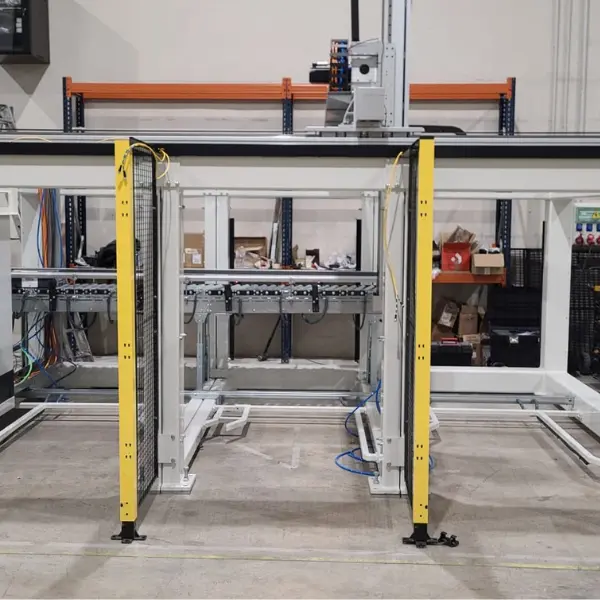
A wall mounted robot travels on a track integrated into a rigid frame above the working area. The robot hangs from a carriage and moves laterally along the wall or an elevated beam, while still using its six rotational axes to perform tasks below. This is a wall-mounted Robot Transfer Unit configuration, where the linear axis is mounted horizontally on a frame and the robot is suspended from it to create an X-Y-Z wall of reach.
This arrangement is especially valuable in industries that want to keep the floor as clear as possible, for example when forklifts or AGVs move through the area, when regular washdown is required, or when operators need unobstructed access to machines. The wall-based robot track system lifts the seventh axis off the floor, while still providing the long stroke and positioning accuracy required in modern automation.
Motion and Layout Challenges That Favour Wall Mounted Robot Installations
There are some recurring situations where a wall-mounted seventh axis is particularly ideal. One is limited floor space, in factories where the layout is crowded with installed machines, structural columns and safety fences, fitting a floor rail between these elements can be difficult. Locating the seventh axis robot track on a wall or overhead frame can free the ground entirely, making it easier to reorganize workstations or introduce new equipment later.
Cleanliness and safety are also important factors to consider. When the robot track system is elevated, the line is easier to clean and to keep clear of debris. There are no rails to trip over and fewer places where dirt can accumulate.
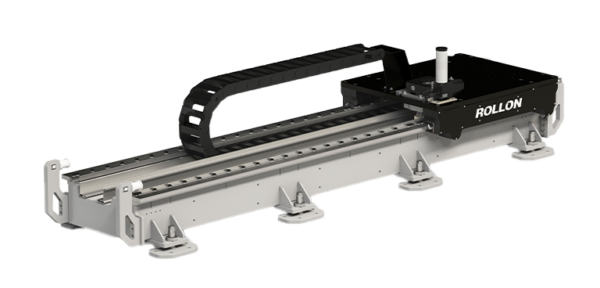
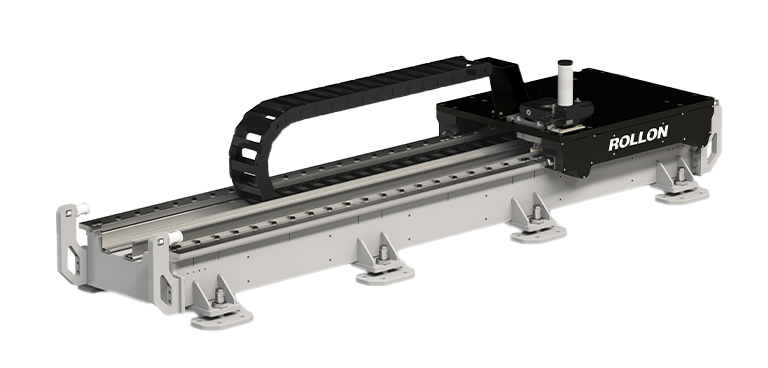
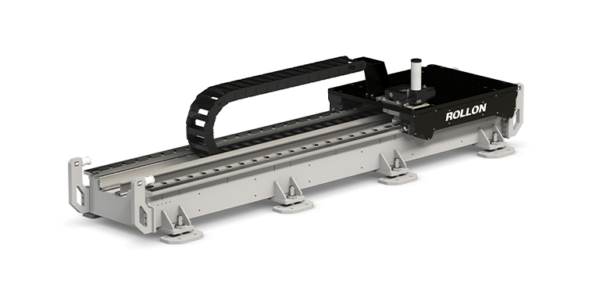
Steel Robot Transfer Unit
The Seventh Axis Robot Track as an Elevated Robot Track System
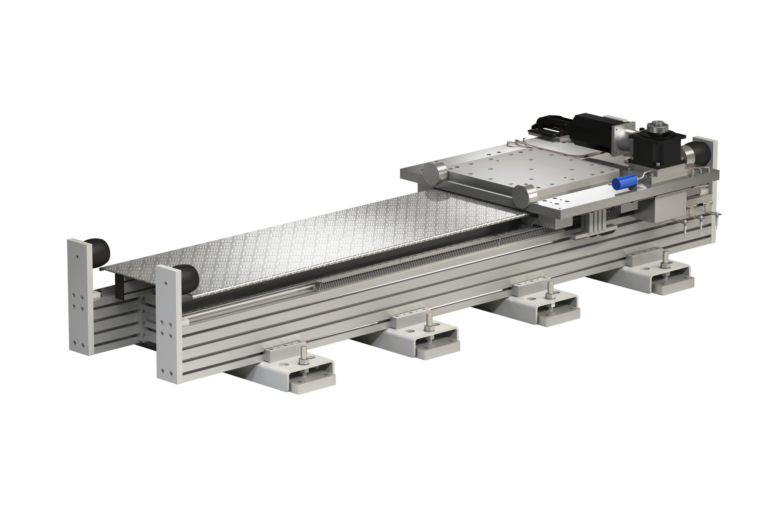
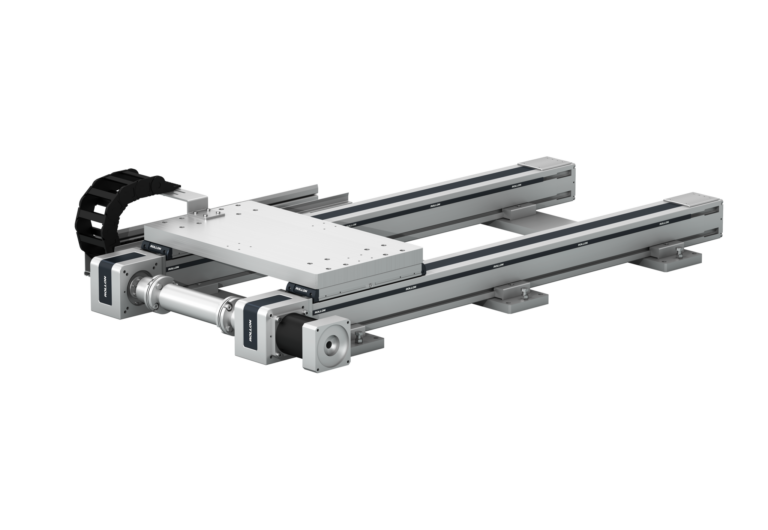
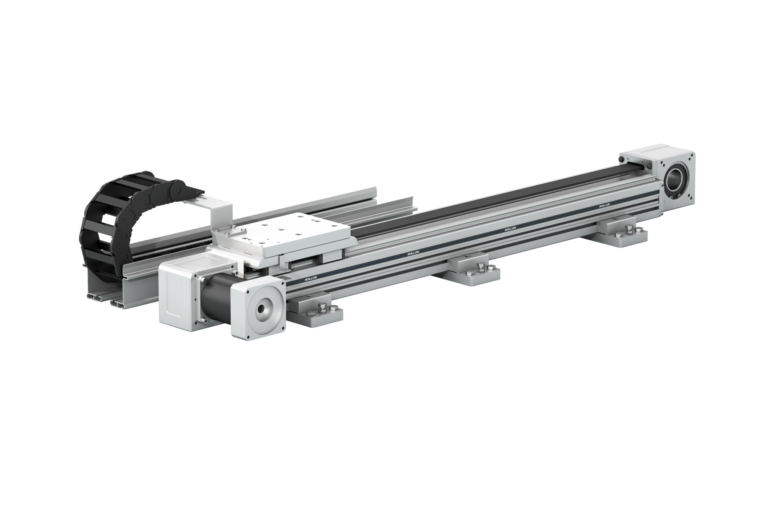
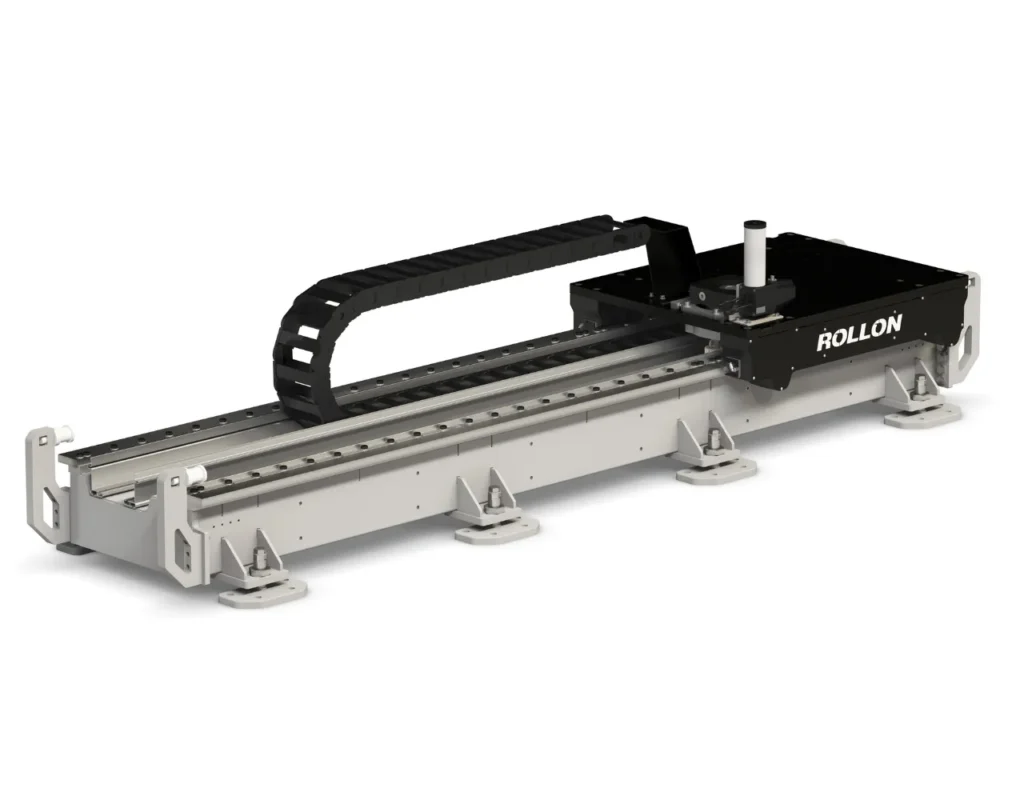
In technical terms, a seventh axis robot track is a linear actuator that adds one more degree of freedom to a six-axis robot. Rollon’s Robot Transfer Units are long, railway-type axes that extend the robot’s working envelope by providing controlled linear motion along a straight path.
These Robot Transfer Units are designed as robust, modular systems that can be mounted on the floor, on the wall or even on the ceiling, depending on the application. The structure typically consists of an aluminium or steel body, precision linear guides, a rack-and-pinion or belt drive, and a carriage plate tailored to the robot’s base. In wall-mounted layouts, the track is fixed to a rigid frame or structural wall, and the robot is bolted to the moving carriage so that it travels horizontally above the work area.
How a Robot Track System Extends Reach, Safety and Flexibility
Adding a seventh axis turns a stationary six-axis robot into a mobile resource that can “walk” along the production line. The robot track system provides the long-stroke linear movement, while the robot’s joints manage the local positioning and orientation of the tool. Together, they create a large, flexible working envelope that would otherwise require multiple robots or very large gantries.
In a wall-mounted configuration, this extended reach becomes even more valuable. A single wall mounted robot can tend several machine tools in sequence, feed parts into different stations, or move between welding, inspection and packaging areas without ever obstructing the floor.
Why Rollon Robot Transfer Units Are Ideal for Wall Mounted Robot Applications
Rollon’s Robot Transfer Units have been developed specifically to extend robot reach in demanding industrial environments, and this experience carries over naturally to wall-mounted installations.
Rollon uses their know-how in heavy-duty actuators and precision linear guides to these robot tracks. The result is a robot track system with a high level of stiffness and repeatability, capable of supporting payloads from small cobots to large industrial robots, even when mounted high above the floor. Options such as covered belts, sealed bearings and rack-and-pinion drives help ensure reliable operation in dirty or harsh environments, which is common in welding, machining or material handling cells.
Choosing a wall-mounted seventh axis robot track is about balancing reach, layout and cleanliness. When floor space is at a premium, when processes are best accessed from above, and when production areas must stay clean, open and easy to navigate, elevating the Robot Transfer Unit can be a very practical solution.
FAQs
What is a wall mounted robot and how does it differ from a floor-mounted installation?
A wall mounted robot is fixed to an elevated structure or frame, usually with the seventh axis rail installed on a wall or overhead beam instead of on the floor.
How does a seventh axis robot track extend the working envelope of an industrial robot?
A seventh axis robot track adds linear motion to the robot’s six rotary axes, allowing the robot base to travel along a long stroke.
How can a robot track system help save floor space and improve safety in crowded production environments?
A robot track system mounted on a wall or overhead frame removes the rail from the floor, freeing up space for operators, pallets, AGVs and forklifts. With fewer obstacles and no floor rail to step over, traffic flow is cleaner, cleaning is easier and there is less risk of trips, collisions or damage to cables and mechanical components.
Which Rollon Robot Transfer Unit solutions can be used to build a seventh axis robot track for wall mounted robots?
Rollon’s Robot Transfer Units (RTU) can be configured for wall or overhead mounting to create a seventh axis robot track for wall mounted robots.