 Linear Guides
 Linear Actuators
 XP Xtrem Position
 Rod Ends
 Telescopic Rails
 Multi-Axis Systems
 XL Xtrem Load
 Spherical Plain Bearings
 Curved Guides and Rails
 Robot Transfer Units
 XT Xtrem Transport
 Needle Roller Bearings
 Cam Followers
 Circular Systems
 Rollon RB
 Locknuts and Rings
 Aerospace
 Building and Furniture
 Electronics
 Food & Beverage
 Healthcare
 Industrial Machines
 Machine Tool
 Material Handling
 Packaging
 Railway
 Special Vehicles
 Robotics & Automation















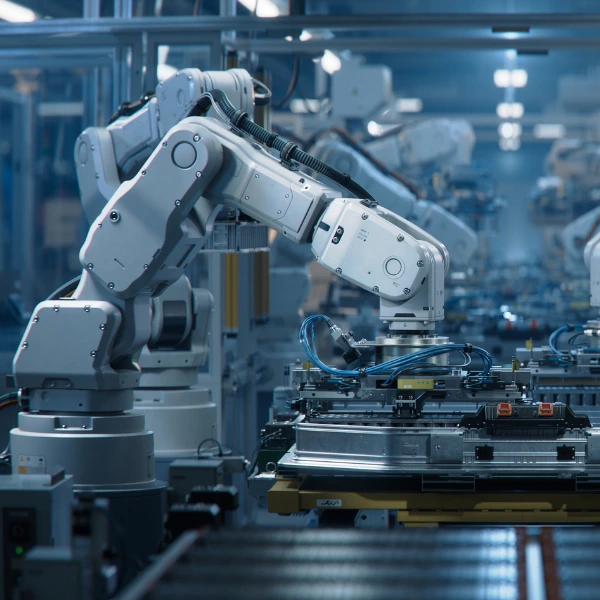
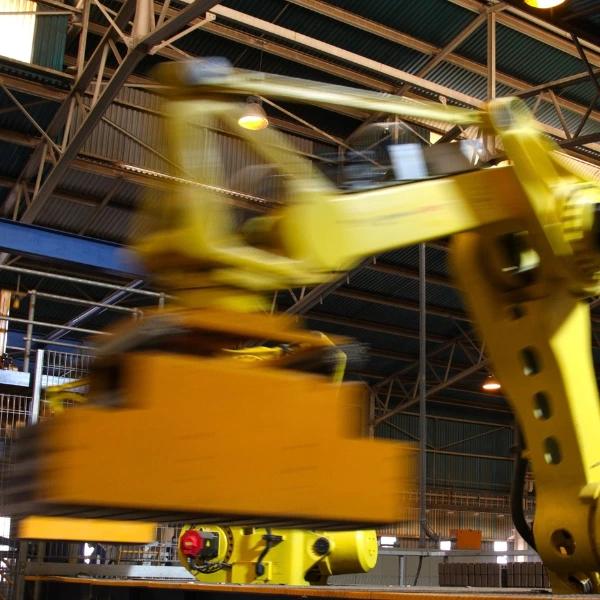


There are all types of transfer systems, but robot transfer units tend to be a top contender. The reasons go beyond their powerful capabilities, but also their convenience. Specifically, they can be installed on the floor, the ceiling, or even the wall. But which is right for your facility?
Learn more about robot transfer units, and how they can benefit your operation. And decide whether a wall-mount robot RTU is the right option for you.
What is a Robot Transfer Unit?
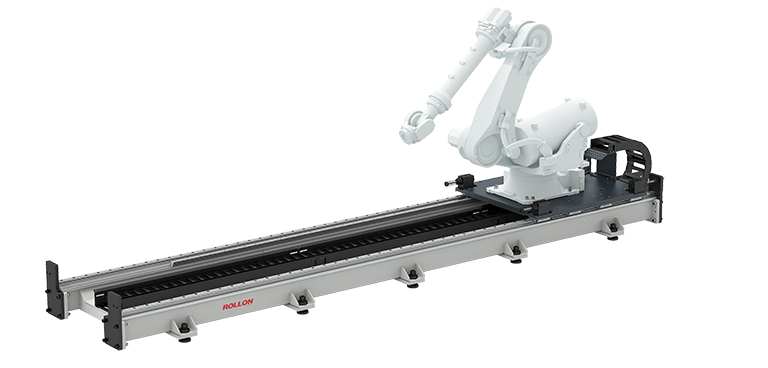
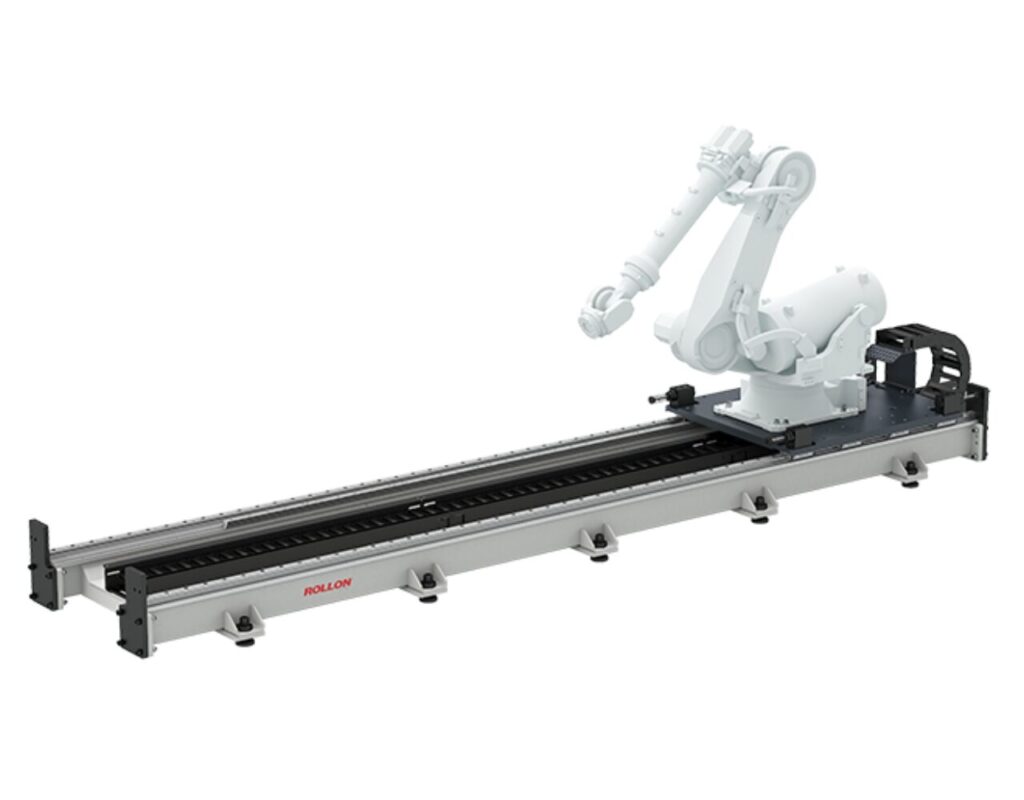
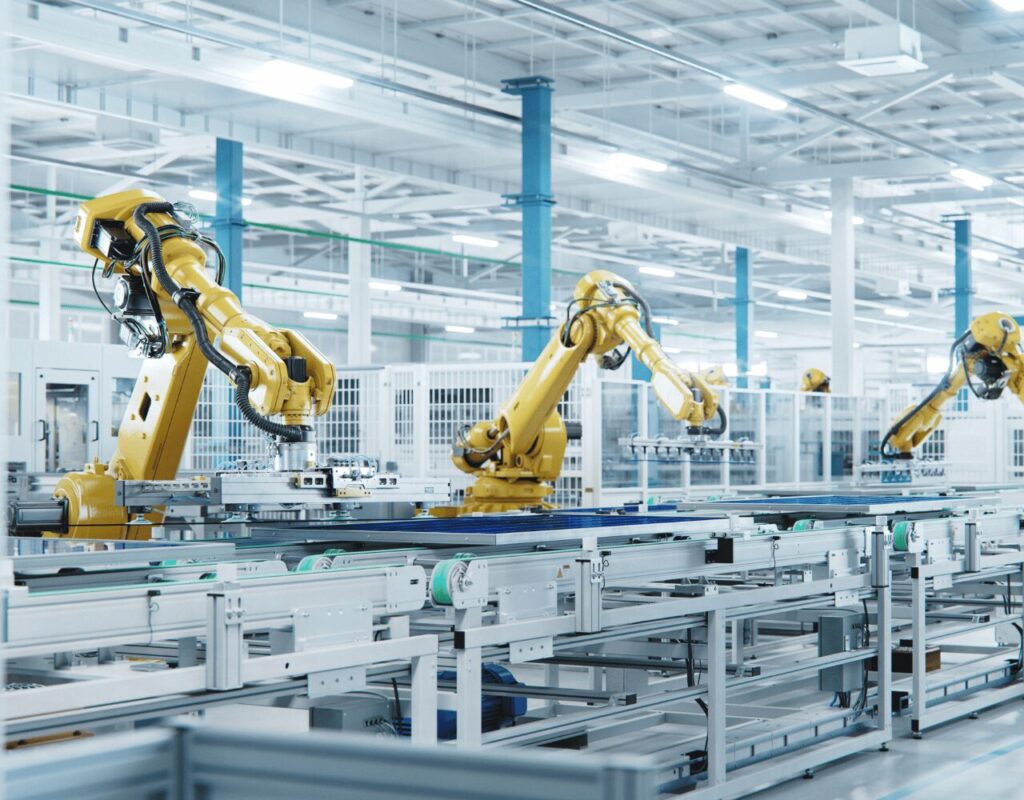
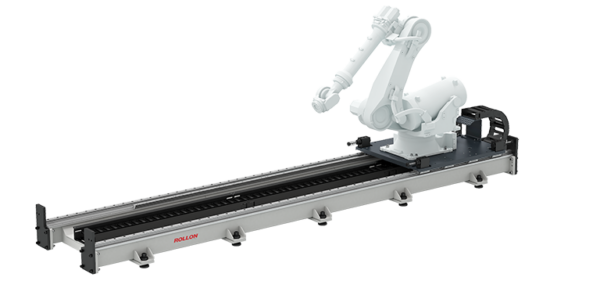
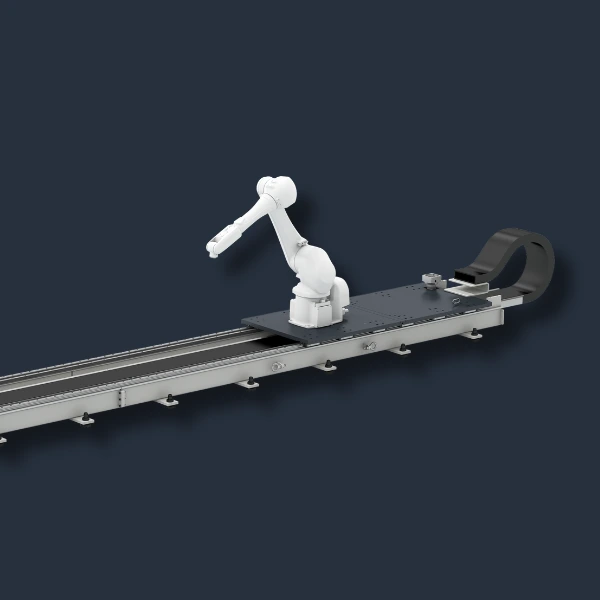
Robot transfer or robot transfer units (RTUs) are long railway-type linear axes. The purpose of a robot RTU is to extend the reach of the robots they transfer. This is done through automated workcells, and results in a variety of benefits.
Understanding the Benefits of the 7th Axis Robot Rail
Robot transfer units often help companies maximize use of their investment in robotics. These extensions are called seventh-axis systems when used to transfer common six-axis robot arms. To be clear, this means having six degrees of freedom.
And because of this, these robot transfer units have seen an uptick in adoption over the last two decades. To no surprise, this increase has complemented the dramatic rise in industrial robots and collaborative robots since 2010 especially.
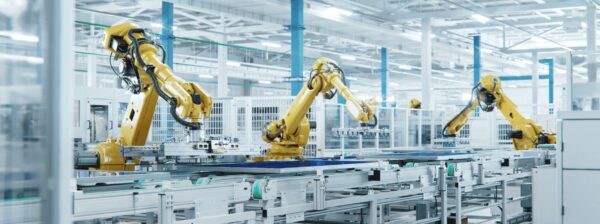
RTUs most commonly install like a railway, which means flat on the floor of the automated facility. This rail enables the attached robots to move through various stations of the facility. This is the case for all types of facility executions, such as:
- cutting
- fastening
- coating
- welding
- material handling
- product-finishing processes
- other assembly
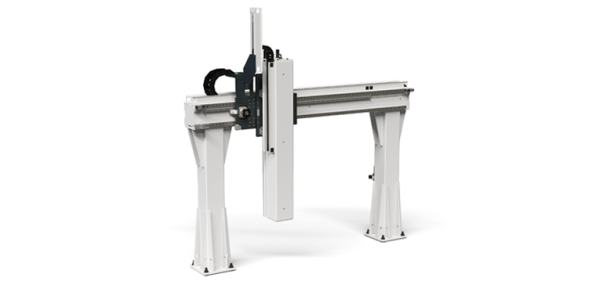
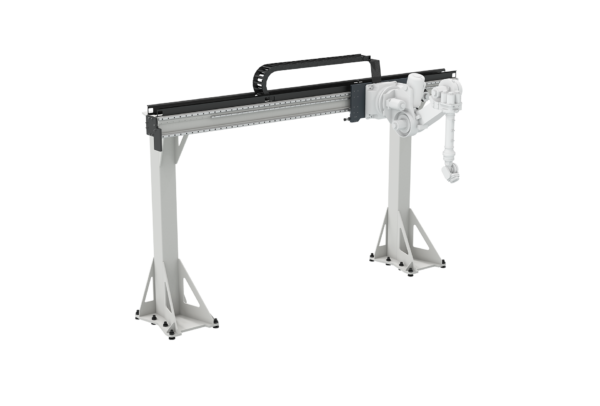
However, a floor-mounted railway is not the only application for a robot transfer unit. Some settings benefit from wall and ceiling-mount RTU. This application requires the installation of linear tracks, which are integrated into rigid gantry frames. Wall-mounted robot transfer units straddle an automated scene below and suspend the robot from the linear-track carriage.
Depending on your process and facility, a wall-mounted transfer robot might make sense.
To be clear: In this context, the phrase “wall mounted” indicates RTU arrangements where the rails are wall mounted horizontally. This mounting elevates the robot on a dedicated steel frame to provide an X-Y-Z wall of reach.
Likewise, the phrase “ceiling mounted” simply indicates RTU arrangements that suspend the robot, inverted. This type of application requires a dedicated steel gantry to provide an X-Y-Z zone of reach from above. Any RTUs that must directly mount to existing building wall and ceiling structures will necessitate customized solutions. In such instances, contact Rollon to discuss the project.
While each facility and process is unique, there are instances where wall-mounted RTU arrangements are common. For instance, here are three instances where wall-mounted transfer robots are more suitable than traditional floor-based installations:
1. Where space is limited
Wall-mounted robot transfer units can nimbly shuttle robots through otherwise cramped factory settings. For RTUs associated with multiple workstations, wall mounting can keep floorspace between those stations clear for human plant personnel.
Elsewhere, a wall-mount RTU can let its attached robot load and unload items on and off a conveyor. Or it can execute palletizing tasks on product waiting for shipment. These tasks can be performed while keeping loading bays clear for forklifts and highway-transport vehicles.
To achieve the reach of wall-mount RTU-shuttled robot, a stationary robot would need to be enormous. In contrast, RTU-based installations can transfer heavy loads long distances.
An added benefit is that wall mounting makes additional floor space. The robot controls, cable harnesses, and power supplies can be located up and out of the way of plant personnel. This increases efficiency, while also safety.
2. Where a given operation is best executed from unusual angles
Wall-mounted RTUs can help robots tend machinery that is best reached from above or a given range of angles. For this reason, wall-mount robot transfer units are common for welding and painting bulky appliance and automotive bodies. Such arrangements are also employed on assembly lines needing the transfer of large workpieces between workcells.
Robotics moved by wall-mount robot transfer units rapidly and precisely move through elaborate paths as well. During this movement, they pick and sort items from above. This is an efficient way to leverage unobstructed views of complementary machine-vision systems less challenged by ambient conditions.
3. Where a setting needs to be kept clean or clear
In some cases, wall-mount RTUs bear robots that can tightly retract out of an assembly line’s flow of goods. In human-robot collaborative environments, this is incredibly beneficial. Essentially, wall-mounted robot transfer units can execute heavy-duty or precise tasks while steering clear of personnel.
In cleanroom settings, wall-mount RTUs can move robots that can temporarily dip in and out of controlled rooms or areas. This minimizes particle contamination risk, for one thing.
Wall-mount robot transfer units are also easier to build around existing production layouts than traditional RTUs. This keeps them clear of previously installed equipment that may be extremely difficult and costly to relocate.
Wall-mount RTU robots can improve the functionality of a warehouse with limited floor space.
Case in point: One wall-mount Robot Transfer Unit example
Consider the steel-body Rollon RTUw — a rack-and-pinion driven wall-mounted robotic transfer unit. This robot RTU was designed to precisely move robots from Kawasaki, ABB, Fanuc, Yaskawa, Kuka, and other suppliers. The goal was to leverage Rollon’s vast technical expertise in helping machine builders engineer cartesian systems.
This RTUw includes a both a rigid linear body (serving as the main robot track of travel) and vertical legs made of steel. In fact, the RTUw comes in variations to transfer robots and their payloads from 1 to 15,000 kg. For example, the RTUw-800 carries static payloads of 10,000 to 15,000 kg and dynamic payloads of 3,000 to 5,000 kg.
The designs borrowed from well-proven linear-motion automation. The result was far greater extension (and far lower cost) than any changes to the robotic design itself allowed. That’s especially true as robots have inherently inflexible work volumes.
In contrast, robot transfer units such as the RTUw have theoretically endless strokes. This is because the design incorporates electric-motor-driven rack and pinion sets. Therefore, a facility can constantly move robotic arms between adjacent machining zones, assembly areas, and other workstations.
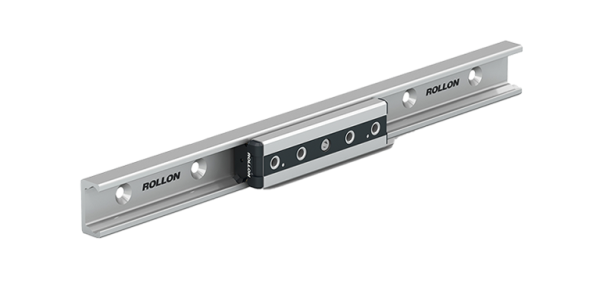
Rollon RTUw systems have servomotor-powered rack-and-pinion linear drives with machined ends. This design is intended for easy assembly, expansion, or retooling. Completing the assembly are precision linear guides, carriage wipers, and single-point lubrication. These additions enable strokes at 3 m/sec and 3m/sec² at ±0.020-mm repeatability.
However, there are additional ways to enhance the performance of your robot transfer unit. Optional Rollon RTUw features include:
- automatic PLC-commanded lubrication
- robot risers and application-specific equipment platforms (including cleanroom, explosion-proof, and washdown variations)
- sensor brackets and cam rails
- assembly
- metrology support
Robot Transfer Unit Considerations
Like any warehouse or plant application, there are considerations to be aware of. Here are just a few caveats to wall mounting robotic transfer units:
The robot itself must be adaptable to or specifically designed for wall-mount orientations. To maintain stability and accuracy values, axes’ homing, zeroing, joint-limit, and gravity-related parameters must be set. These factors will account for the robot’s mounting orientation.
In addition, cables must be secured in some manner, which is necessary for a few reasons. For starters, securing the cables will avoid wear. Further, the wall-mount orientation requires a proper path to follow. And finally, securing the cables meets the satisfaction of safety requirements.
Next steps in designing a wall-mount robot installation
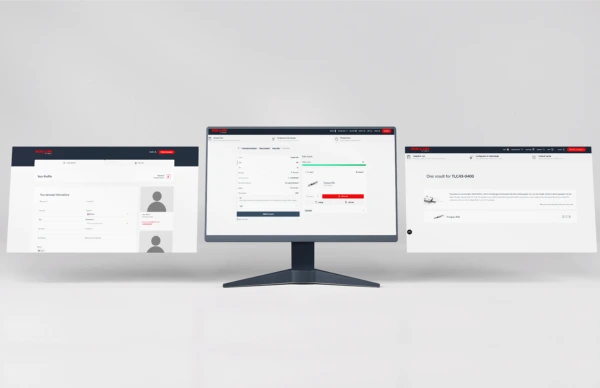
For more information on how to integrate RTUs into your automated installation, download this Rollon white paper. You can also enter your own application’s parameters and find out what makes sense for your facility. Explore the extensive capabilities of Rollon’s robot transfer units at the myRollon Multi-Axis Systems configurator.
Also be sure to visit my.rollon.com/corp/products/actuator-system-line/rtuw.
Our experts can solve your challenges
The experts are Rollon understand that every facility or plant is unique, with its own set of challenges. Whatever hurdle or setback you might be experiencing, we can help you navigate it. Even if it’s as simple as increasing production.
We have the materials and technologies to improve your efficiency, whatever that requires. We are also available to discuss and share our input. Reach out today so you can operate at maximum efficiency. Our experts can solve your challenges.