 Linear Guides
 Linear Actuators
 XP Xtrem Position
 Rod Ends
 Telescopic Rails
 Multi-Axis Systems
 XL Xtrem Load
 Spherical Plain Bearings
 Curved Guides and Rails
 Robot Transfer Units
 XT Xtrem Transport
 Needle Roller Bearings
 Cam Followers
 Circular Systems
 Rollon RB
 Locknuts and Rings
 Aerospace
 Building and Furniture
 Electronics
 Food & Beverage
 Healthcare
 Industrial Machines
 Machine Tool
 Material Handling
 Packaging
 Railway
 Special Vehicles
 Robotics & Automation










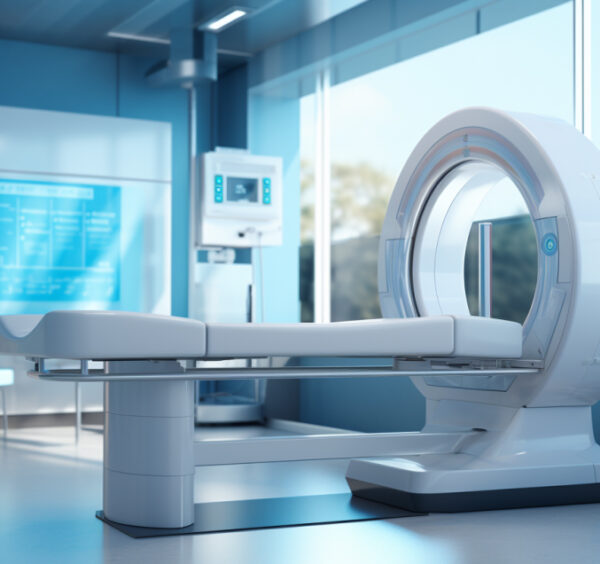







Medical imaging has evolved dramatically since the discovery of X-rays, becoming a cornerstone of modern diagnostics and treatment. Behind today’s advanced systems lies a combination of sophisticated engineering and close industry collaboration. This article examines how Siemens Healthineers and Rollon work together to meet the demanding mechanical, operational, and safety requirements of contemporary medical imaging equipment, while also leveraging this collaboration for initiatives that improve the hospital experience for young patients.

© Siemens Healthineers
In 1895, German physicist Wilhelm Conrad Röntgen made a discovery that would transform modern science and medicine: while experimenting with gas discharges in a glass tube in his Würzburg laboratory, he observed mysterious rays capable of penetrating solid materials. Unsure of their nature, he named them X‑rays. His groundbreaking work earned him the first Nobel Prize in Physics in 1901 and laid the foundation for non-invasive internal imaging, a revolution still felt today.
Shortly afterward, the foundations of what would later become Siemens Healthineers were established, as Siemens & Halske and Reiniger, Gebbert & Schall began industrial X‑ray production. Their commitment to engineering excellence played a decisive role in advancing Röntgen’s discovery into practical medical systems.
Today, that heritage lives on in Siemens Healthineers, a global leader in medical technology, diagnostics, imaging, and therapeutic equipment. Headquartered in Forchheim, Franconia, near Erlangen, Siemens Healthineers employs more than 16.500 people across its German locations.
“Kemnath is the main mechatronics factory for all internal Siemens Healthineers needs,” explains Samuel Teljeur, Global Pooling Commodity Manager. “We handle machining, welding, coating, and the base assembly. Once that is completed, the systems are sent to our Forchheim site for final assembly and delivery to the customer.”
But the work extends far beyond manufacturing. As Teljeur notes, “even the most sophisticated technology is only effective if people are trained to use it correctly, and if the room that hosts the equipment has been properly prepared. Siemens Healthineers takes care of all these aspects. We don’t just supply products; we deliver a complete project, providing 360-degree support”.
Designing motion systems for critical healthcare settings
The medical equipment produced at the Kemnath site – including CT scanners, oncology systems, and angiography equipment – relies on linear motion components that must perform reliably under some of the most demanding conditions in healthcare. These systems are expected to move smoothly, quietly, and with precision, often while supporting substantial loads, operating in sterile environments, and maintaining complete mechanical stability over many years of continuous use. They must withstand high acceleration forces, compensate for structural misalignments, avoid contamination, require minimal maintenance, and ensure the safety of both patients and clinical staff. This is the context in which Siemens Healthineers and Rollon collaborate.
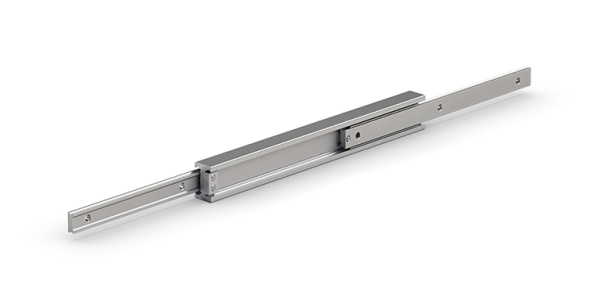
One example is the linear motion system designed for CT scanners, where access for maintenance must be both safe and effortless. “Our CT scanners employ special telescopic rails that support maintenance operations,” Teljeur explains. “The X‑ray tube is a bit like a light bulb, so you need to change it over the course of the machine’s lifespan, around 15–20 years. Over this time, they consume about five X‑ray tubes, and the replacement happens in the field, in hospitals. We needed a system that ensured easy maintenance and the safe extraction of the tube, which is quite heavy: it weighs up to 65 kg.”
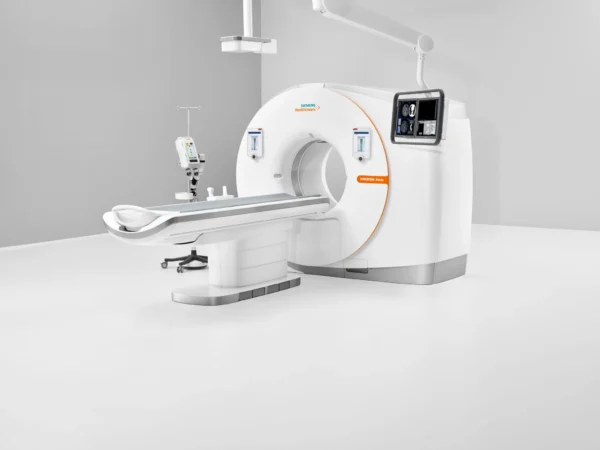
SOMATOM Force delivers advanced Dual Source CT imaging powered by the unique Vectron™ X-ray tube. © Siemens Healthineers
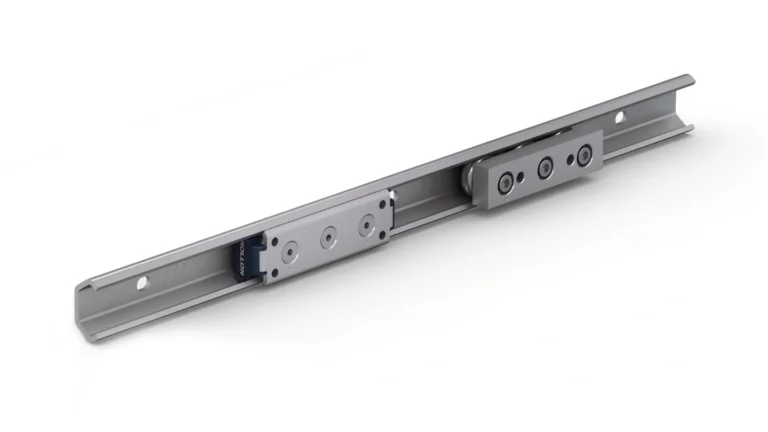
Rollon designed custom telescopic rails to manage these forces. As Stephan Schott, Industry Manager Medical at Rollon, recalls, “this was one of the first largescale projects carried out together by Rollon and Siemens Healthineers. These telescopic rails were specially developed to support ease of maintenance while withstanding the high acceleration of the CT scan: it rotates up to four times per second and when you rotate something that heavy that fast, the load on the system is immense.”
The demands placed on ceiling-mounted angiography systems differ but are no less rigorous. Mounted on ceiling rails, these systems must move not only back and forth but also sideways, in emergency or surgical environments where space must be cleared instantly. “Angiography systems are a classic X‑ray application, but unlike CT or MRI scanners, they are used in ERs or operating rooms,” Teljeur explains. “This is why it is important to be able to move the system quickly when it’s no longer needed, so staff have the space they require.”
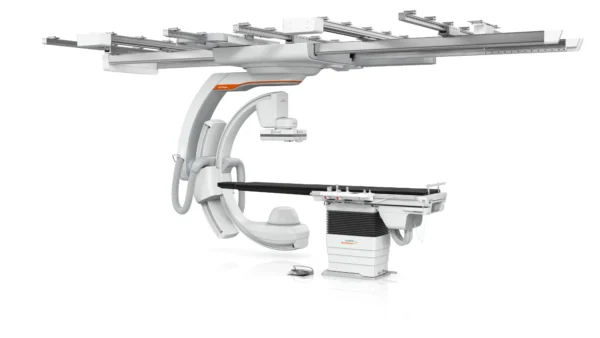
ARTIS icono ceiling with Xpand has been designed to provide extra freedom and flexibility. © Siemens Healthineers
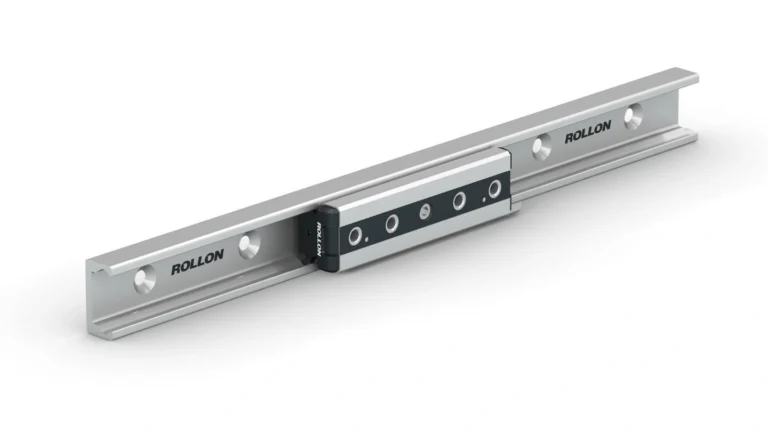
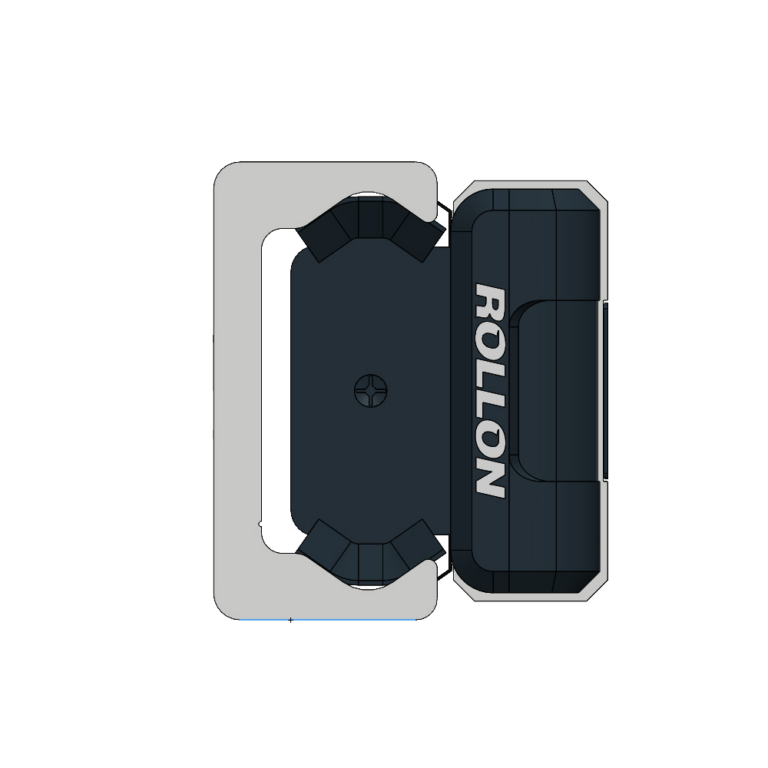
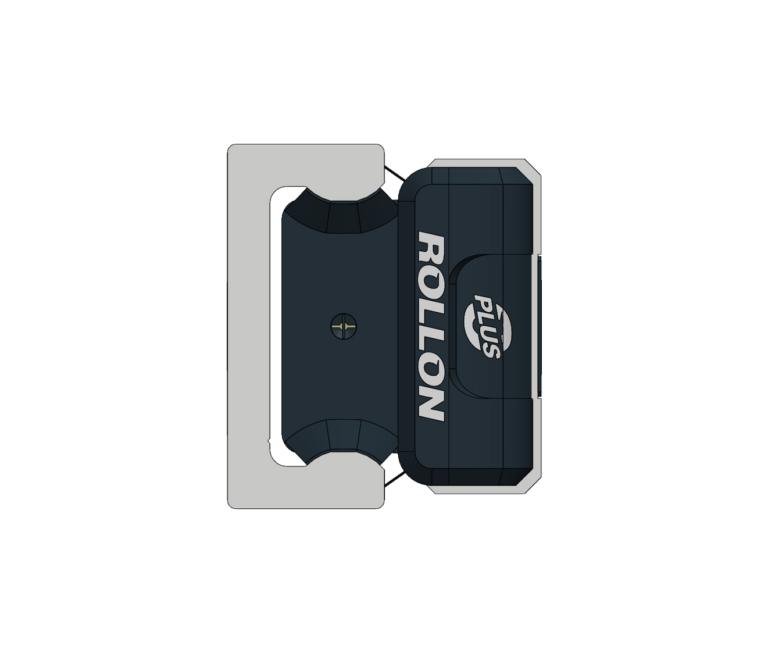
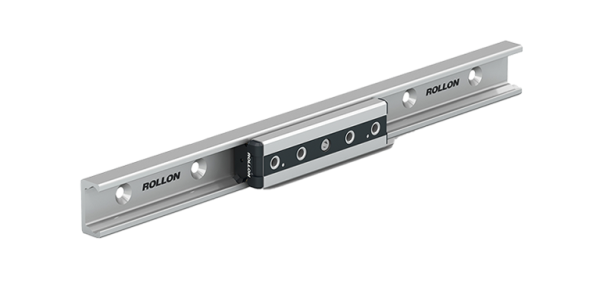
To address this, Rollon developed an automated custom solution based on its proven Compact Rail technology, capable of compensating for misalignment and equipped with actuator heads and belts for smooth, controlled motion. The requirements were uncompromising: no grease, no contamination risk, quiet operation, full operator and patient safety, and the ability to carry loads of up to one ton along a four‑meter rail. The result is a silent, reliable system that staff can reposition with minimal effort. As Teljeur notes, “with Rollon’s linear system, operators can move the angiography system out of the way effortlessly at the push of a button”.
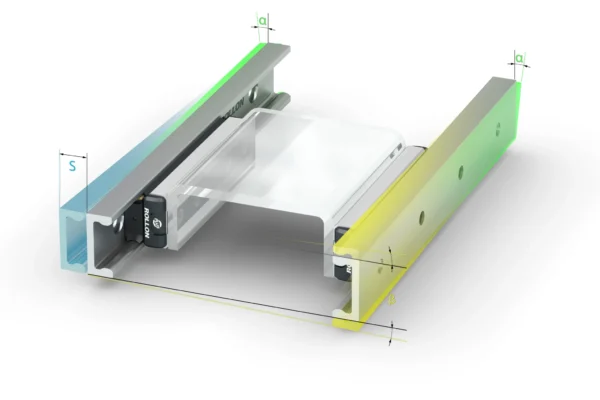
The Compact Rail system can compensate misalignments.
Contributing to the pediatric patient experience with X-Rail linear guides for the MINITOM Kids
Beyond advanced imaging systems, Siemens Healthineers and Rollon have collaborated on a unique educational project aimed at improving the hospital experience for children.
“In 2023, we wanted to create an educational device for hospitals that would help children become familiar with MRI and CT scanners in a playful way,” Teljeur recalls. The project was given to apprentices at the company’s Educational Development Center, who worked to develop this concept from scratch.
The result, the MINITOM Kids, is an interactive learning and educational device featuring Gerda the Brave Giraffe, a character used to explain imaging to young patients. “When Gerda goes into the scanner, the tablet shows that she has beads in her belly that need to be removed for her to feel better,” Teljeur explains. “It’s a simple way to help children understand what the real machine allows doctors to do: look inside the body to understand what’s happening.”
Children can also crawl into the MINITOM Kids tunnel, hear the peculiar scanner sounds, and experience the confined space in a safe and playful setting. “This helps them understand not only how the scanner works, but also what sensations and sounds they will encounter during an actual examination,” says Teljeur. What began as a one-off educational idea quickly grew: “In the first year alone, we received surprisingly many requests for the MINITOM Kids.”
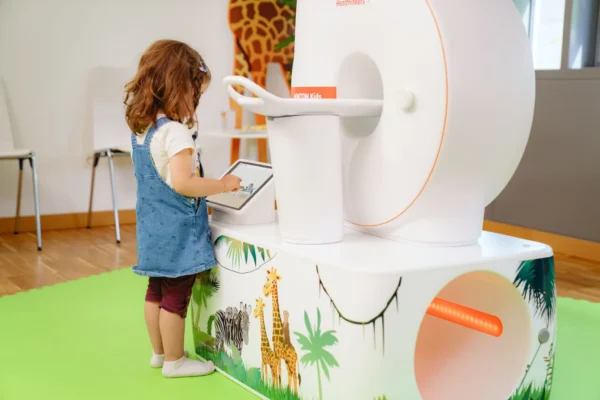
MINITOM Kids allows children to become familiar with the scan process through interactive exploration. © Siemens Healthineers
Rollon contributed X‑Rail linear guides to enable the smooth motion of the small patient bed that carries Gerda into the scanner. While the application is mechanically simpler than those found in full‑scale imaging systems, it still required smooth motion, suitable for repeated use in public hospital spaces and safe for children to interact with.
Integrating reliability, innovation, and patient experience
The collaboration between Siemens Healthineers and Rollon demonstrates how modern medical imaging relies on robust mechanical engineering as much as on electronics and software. High‑performance motion systems help ensure safety, reliability, and precision in critical clinical environments, from high‑acceleration CT gantries to quickly repositionable angiography systems. Meanwhile, initiatives like the MINITOM Kids illustrate how engineering can support not only diagnostic performance but also patient comfort and emotional wellbeing, especially for children.
Together, these efforts highlight how technical excellence, thoughtful design, and a deep understanding of clinical needs come together to shape the future of diagnostic medicine.
Explore Rollon’s medical industry solutions.