 Linear Guides
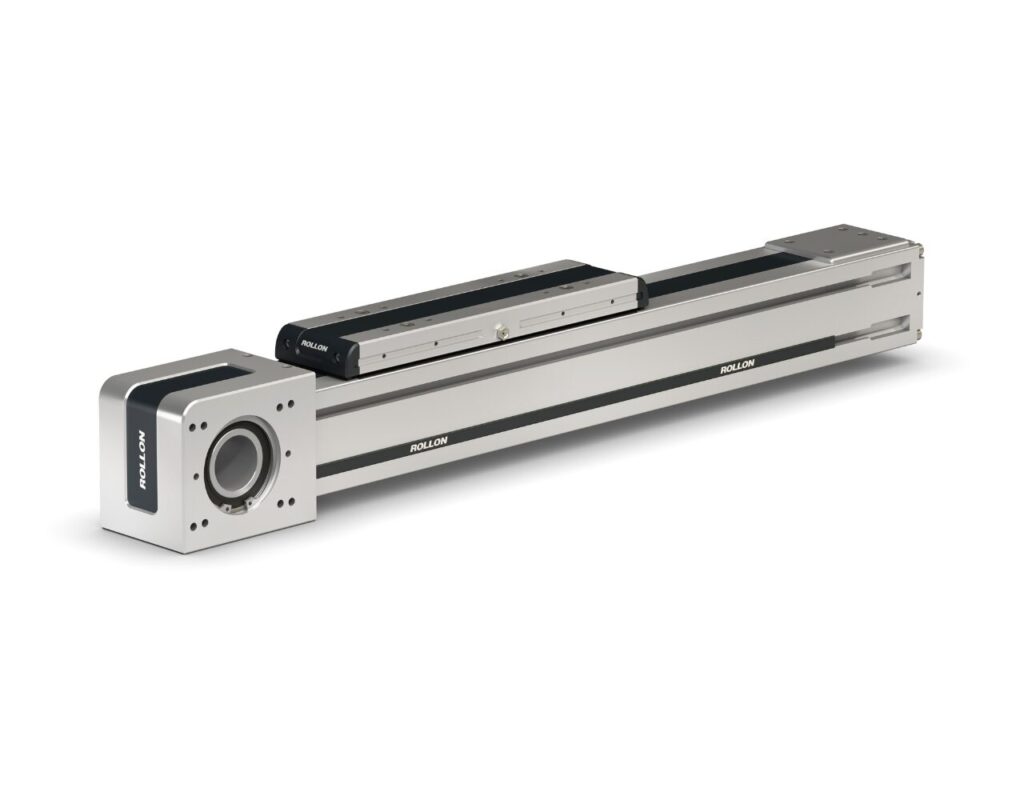 Linear Actuators
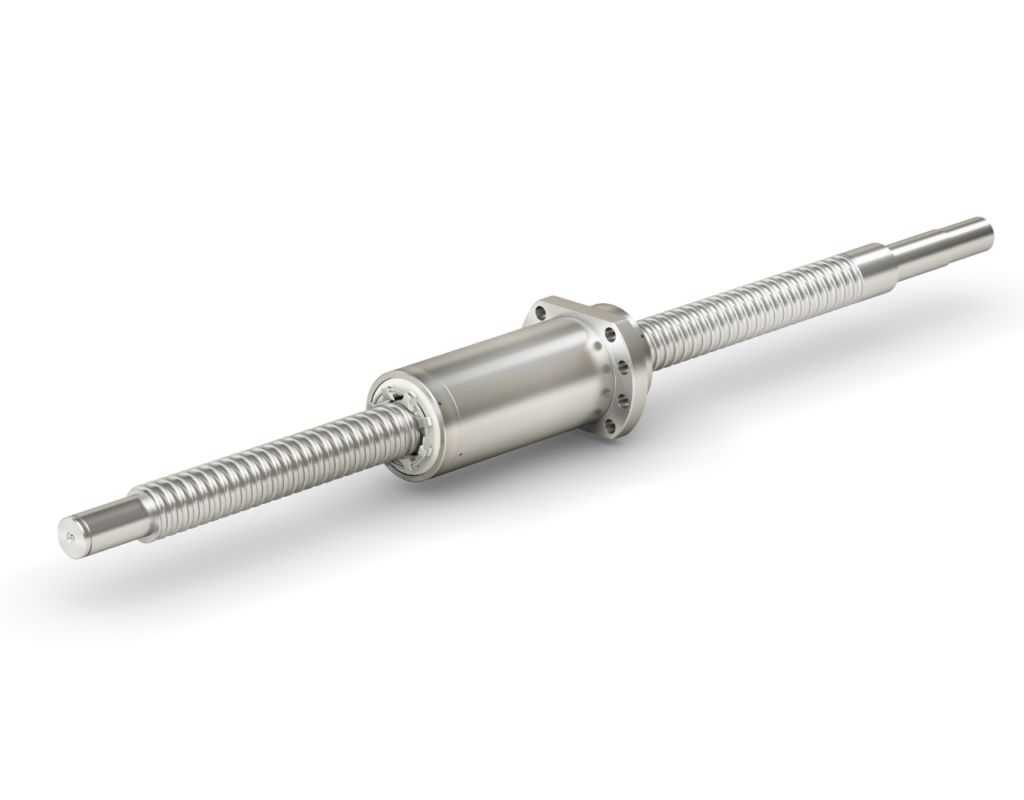 XP Xtrem Position
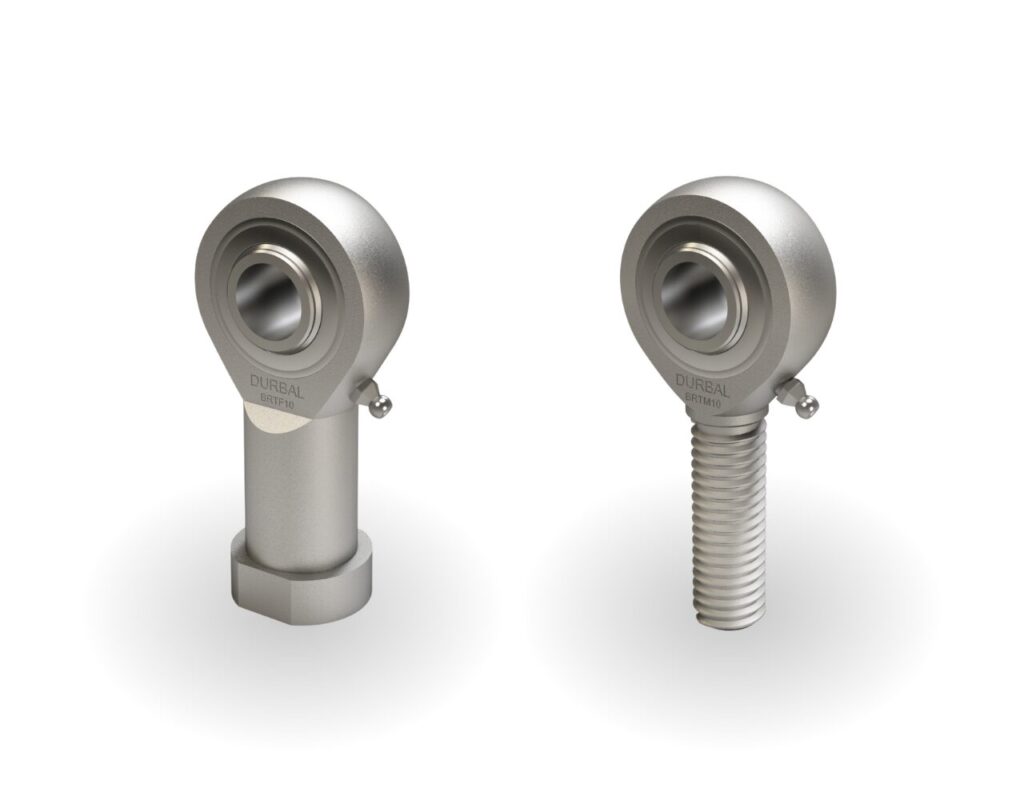 Rod Ends
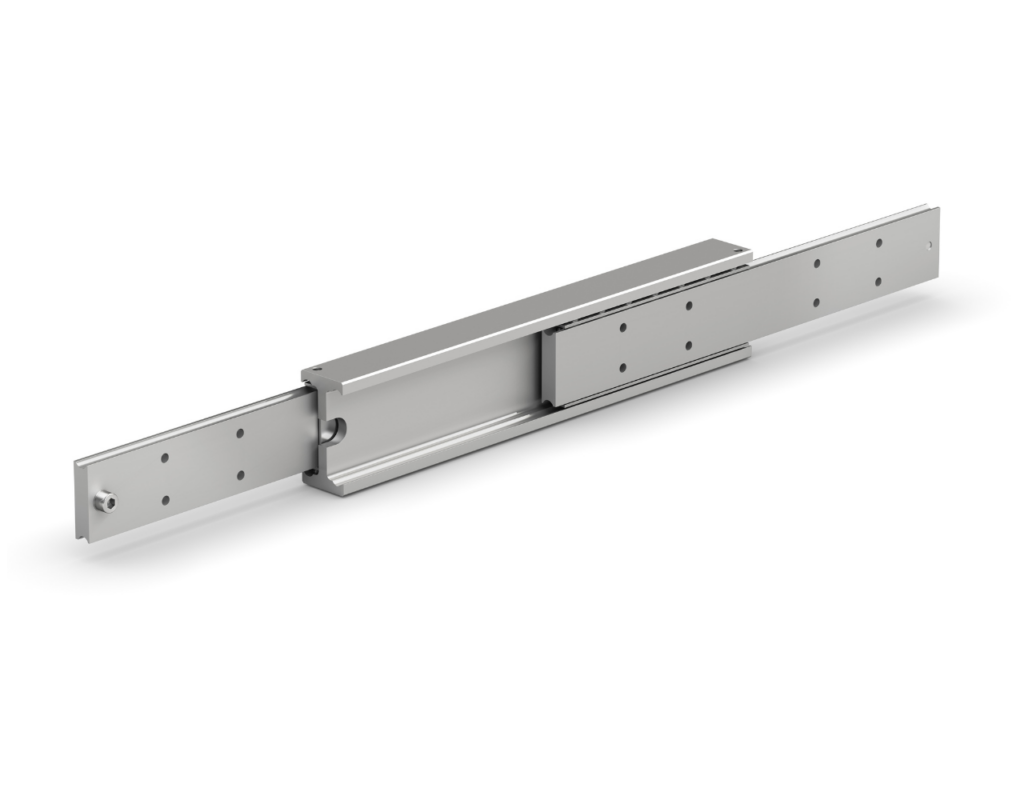 Telescopic Rails
 Multi-Axis Systems
 XL Xtrem Load
 Spherical Plain Bearings
 Curved Guides and Rails
 Robot Transfer Units
 XT Xtrem Transport
 Needle Roller Bearings
 Cam Followers
 Circular Systems
 Rollon RB
 Locknuts and Rings
 Aerospace
 Building and Furniture
 Electronics
 Food & Beverage
 Healthcare
 Industrial Machines
 Machine Tool
 Material Handling
 Packaging
 Railway
 Special Vehicles
 Robotics & Automation




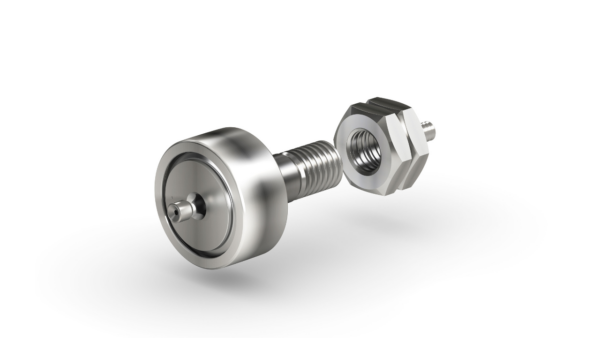




















Choosing the right bearing is a crucial decision to ensure performance, lifetime and reliability in mechanical systems. This article illustrates the main types of bearings, their structural and functional differences, and the technical criteria to consider when selecting the most suitable solution for your application.
Whenever a shaft needs to rotate relative to a support, a bearing comes into play. It is an essential component that allows turning by reducing friction while supporting the load. Understanding how to choose a bearing for your specific application starts with matching the right type to your operating conditions.
There are different types of bearings:
- Ball bearings
- Roller bearings
- Tapered roller bearings
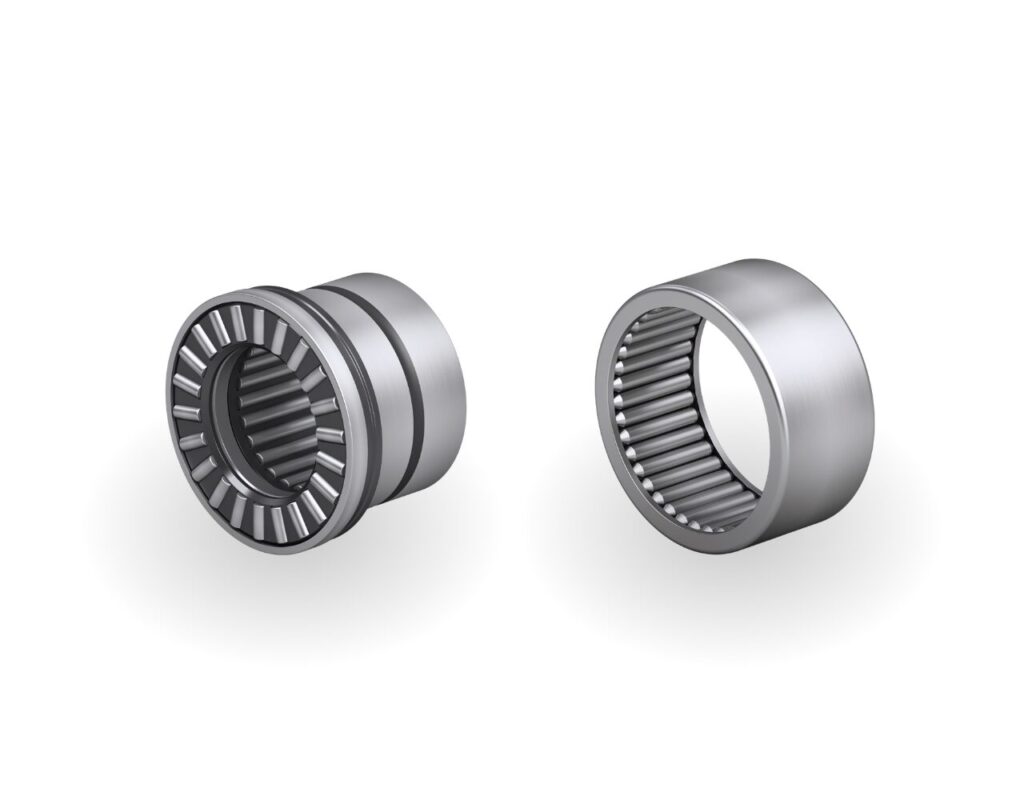
- Needle bearings
The difference between rollers and needles lies in their size: in needle bearings, the ratio between the needle’s length and diameter is greater than 3.
Another important difference concerns the presence of a cage. Bearings with cages can compensate for minor misalignments and operate well at high speeds; those without cages, on the other hand, are less tolerant of mounting errors but can withstand higher loads.
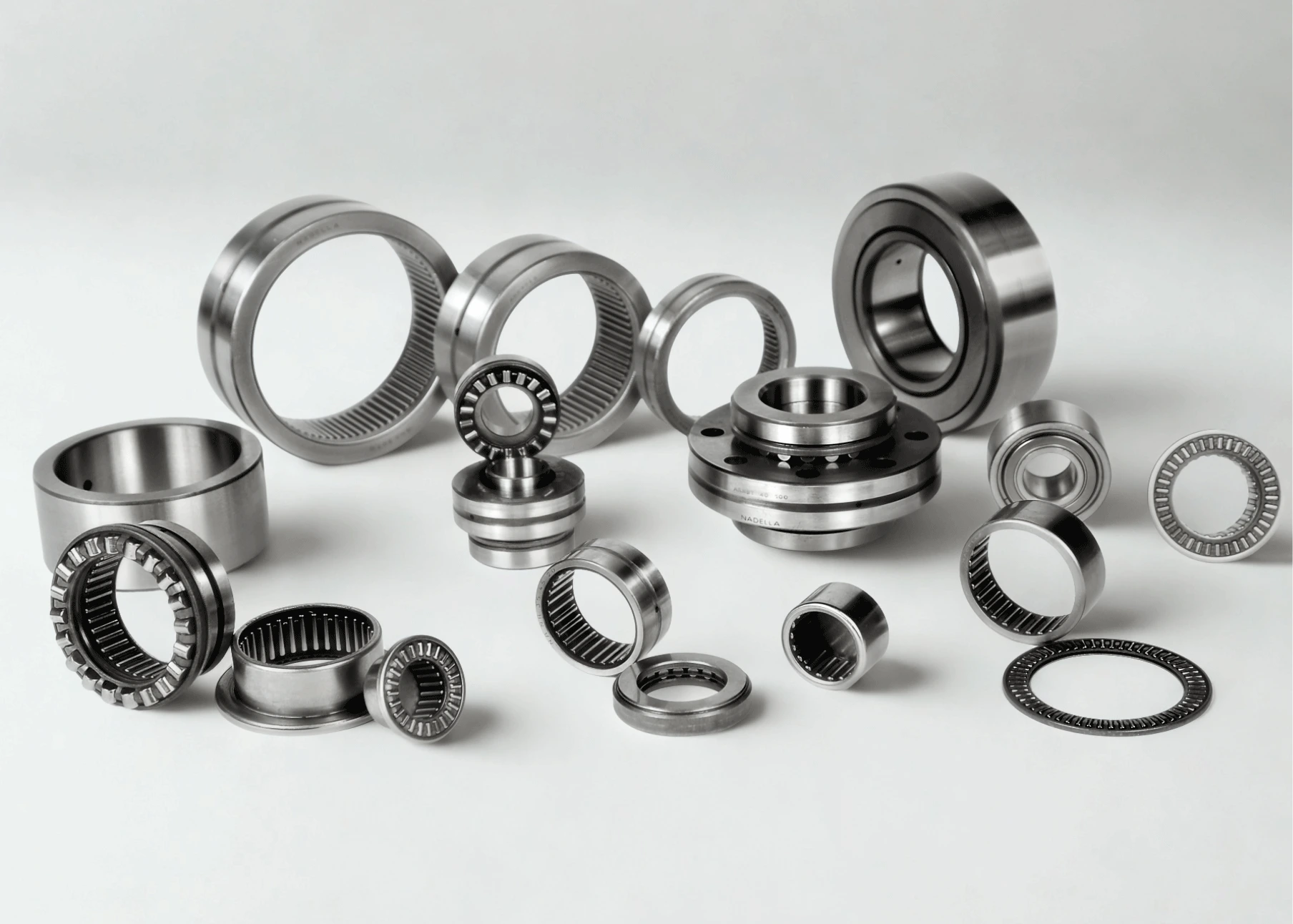
Nadella has been a pioneer in the development of needle bearings since 1930, the year it was founded. The name itself derives from the German term “Nadellager”, which means “needle bearing”.
Today, the Nadella range, an integral part of the Rollon portfolio, offers a wide variety of technical solutions:
- Needle cages, which retain the needles both inward and outward and allow high-speed rotation.
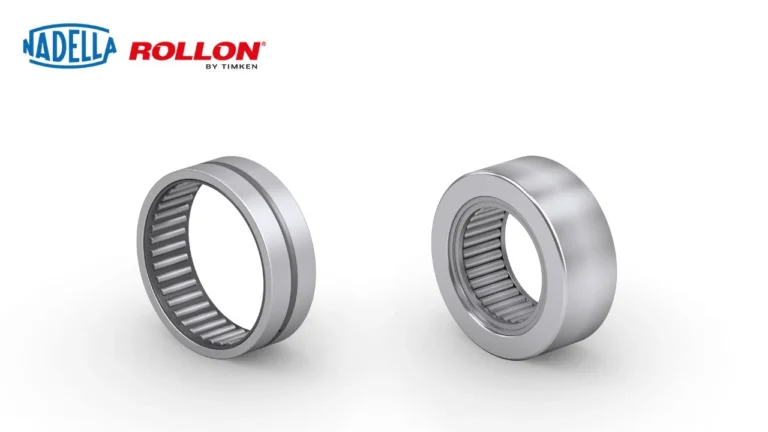
- Needle bushes, consisting of a thin, heat-treated outer ring, with or without a cage, capable of supporting high loads while occupying minimal radial space.
- Needle bearings, with a hardened steel outer ring, available either with a cage or in a full-complement version.
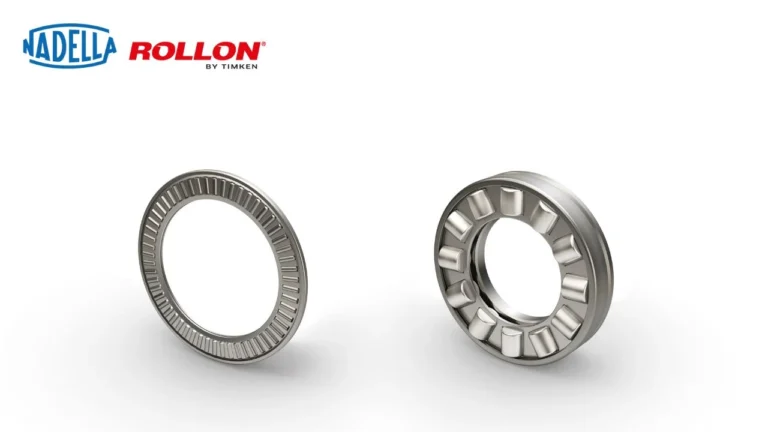
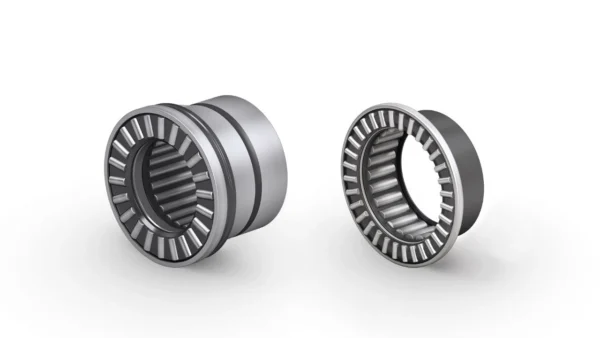
- Thrust bearings, in needle (AX) or roller (AR) versions, ideal for high axial loads in confined spaces.
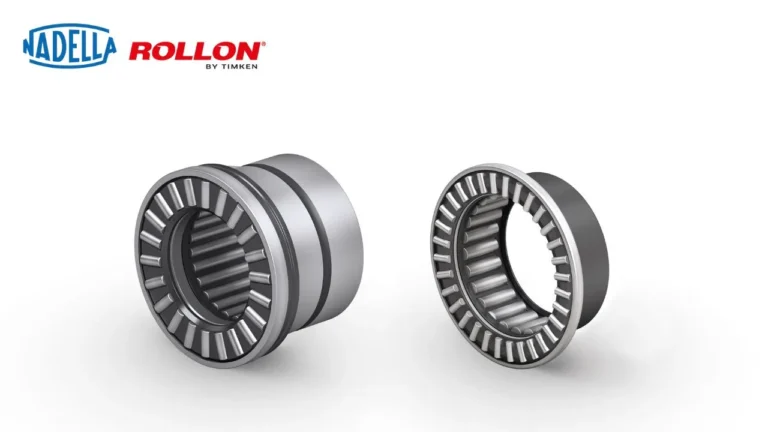
- Combined bearings, which integrate a needle cage and a thrust bearing into a single compact component, suitable for supporting both radial and axial loads.
Selecting the correct bearing depends on a combination of operating and environmental parameters. Let’s take a closer look at these.
Rotation speed and load
The first aspect to consider is rotation speed. In general, ball bearings are more suitable for high speeds, while needle bearings can withstand higher loads, but operate at lower speeds.
The presence of the cage also makes a difference:
- With a cage, load capacity decreases but allowable speed increases; without a cage, there are more needles and therefore greater load capacity, but also more friction and lower speed.
Knowing how to select bearings based on load and speed rating is the foundation of proper bearing choice. Every other parameter builds on getting this balance right.
Load direction
Another key parameter is the direction of the forces involved.
It is necessary to understand whether the load is radial (perpendicular to the shaft axis) or axial (parallel to the axis). For example, the AX bearings in the Nadella range are designed for axial loads only. RAX combined bearings, on the other hand, handle both radial and axial loads, offering a versatile solution in a single component.
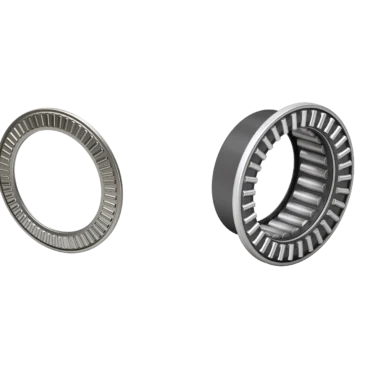
AX and RAX bearings.
Space requirements
When installation space is limited, a needle bearing is almost always the ideal choice. Its slim profile and high load capacity make it suitable for applications where space is at a premium. For engineers asking how do I choose bearing size when radial space is constrained, needle bearings offer the highest load capacity in the smallest cross-section available.
Work cycle and type of movement
The lifetime and reliability of the bearing depend greatly on the operating cycle: how many rotations per minute, whether the load varies or remains constant, and the required service life, all of which influence correct bearing sizing.
Generally, needle bearings can operate with full or partial rotations but are not suitable for swiveling angles of only a few degrees. In these cases, the same needles would always be subjected to the motion, leading to localized and premature wear.
Mounting and misalignment tolerance
Even a perfectly sized bearing can underperform if mounting conditions aren’t accounted for during selection. Shaft deflection, housing misalignment, and assembly tolerances all affect how the bearing sits and operates under load. Bearings with cages generally handle minor misalignment better than full-complement designs. Self-aligning ball bearings and spherical roller bearings are engineered specifically for applications where shaft deflection or housing misalignment is expected, but they come with trade-offs in load capacity and speed.
Materials
Most bearings are made of bearing steel, but the real difference lies in the material of the support on which they are mounted.
There are bearings with or without an inner or outer ring, and even cages with only needles. This configuration results in direct contact between the needle and the machine surfaces, which must feature adequate hardness and surface finish (e.g. grinding). If the correct material is not specified, there is a risk of reducing both the lifetime and load capacity of the bearing.
Bearing clearance and shaft fit
Selecting the correct bearing also involves understanding how to choose a bearing by the size of shaft and the corresponding housing bore. Internal clearance, the small gap between the rolling elements and the raceways, determines how the bearing performs under thermal expansion and varying loads.
A guide to choosing the correct bearing clearance accounts for the fit between the shaft and inner ring, the housing and outer ring, and the expected operating temperature range. Getting the clearance wrong can lead to excessive preload, premature wear, or insufficient support.
Lubrication and working temperature
Good lubrication is essential for the bearing’s lifetime. Greases or oils can be used, preferably with EP (Extreme Pressure) additives, which improve resistance to high contact pressures.
The choice of lubricant is also linked to the working temperature:
- versions with rubber seals (generally ball bearings) retain grease better, but operate at temperatures up to approximately 120 °C.
- All-metal bearings can reach higher temperatures, provided that specific high-temperature lubricants are used.
Finally, it should be noted that in needle bearings, contact is linear (rather than point contact as in ball bearings): this generates more friction and heat, making lubrication even more important.
Connect with Rollon
The right bearing choice is not just about finding a compatible component. It means optimizing the entire system in terms of efficiency, durability, and accuracy.
Thanks to Nadella’s experience and historical know-how, Rollon offers a robust technical portfolio capable of meeting many mechanical and environmental requirements.
If you would like to find out more about which solution is best suited to your application, contact us: our technical team is ready to assist you in choosing the most suitable bearing.