 Linear guides
 Linear actuators
 XP Xtrem Position
 Rod ends
 Telescopic rails
 Multi-axis
 XL Xtrem Load
 Spherical plain bearings
 Curved guides
 Robot transfer units
 XT Xtrem Transport
 Needle roller bearings
 Cam followers
 Circular systems
 Rollon RB
 Locknuts and rings
 Aerospace
 Contract & Building
 Electronics
 Food & Beverage
 Industrial machinery
 Healthcare
 Machine tool
 Material handling
 Packaging
 Railway
 Robotics & Automation
 Special Vehicles



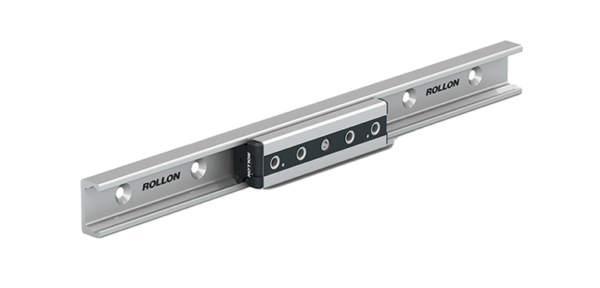


















In this article, we explore the key differences between needle and cross roller guides and other linear guide technologies and analyse how to select the best option based on specific application requirements.
Needle roller and cross roller guides differ from recirculating ball or roller profile rail guides in a few fundamental ways.
The most significant difference is the type of bearing element used. Needle roller and cross roller guides rely on cylindrical rollers instead of balls distributed along the length of the guide. This design results in a much larger surface contact area compared to a recirculating ball rail, which directly affects load capacity, stiffness, and motion quality.
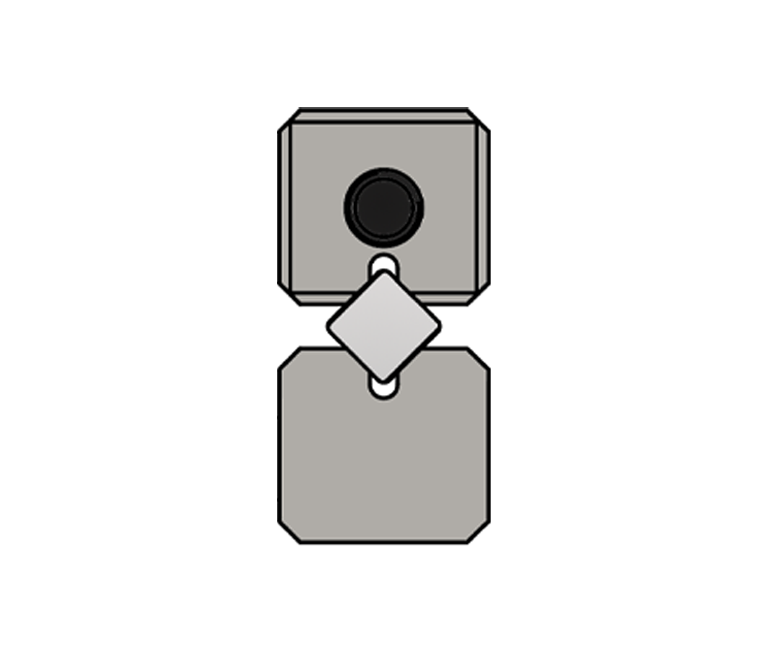
Cross roller guides use relatively large cylindrical rollers arranged in an alternating crossed configuration, with each roller positioned at a 90° angle to the adjacent one. This crossed arrangement creates extremely precise engagement between the rollers and the raceways, enabling high positioning accuracy and smooth linear motion.
Needle roller guides, by contrast, use tall, thin, needle-like rollers stacked in line with each other along the guide length. This geometry maximizes the contact area between the rollers and the raceways, allowing the guide to support much higher loads and achieve increased stiffness.
As a result, cross roller guides are typically selected for applications that require a combination of high load capacity and very high precision, while needle roller guides are preferred when maximum load capacity and stiffness are critical. In addition, unlike profile rail guides where the bearing elements recirculate inside the carriage block, the rollers in needle and cross roller guides are retained in position. This non-recirculating design contributes to very smooth and quiet movement characteristics.
Selecting the right guide for the right application
The Rollon Group portfolio – under the Rosa Sistemi brand – includes multiple needle roller and cross roller solutions designed to address different performance needs.
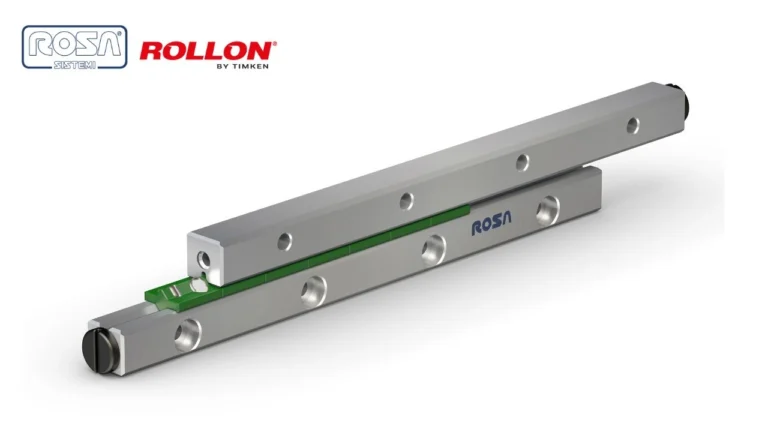
The GR rail, for example, is used in relatively high-load applications that demand very smooth, precise, and reliable linear motion with zero play. It is available with cages made from steel, polyamide, brass, or aluminium, allowing adaptation to various operating conditions and environments. Typical applications include high-precision machine tools, optical equipment, medical scanners, and laboratory equipment.
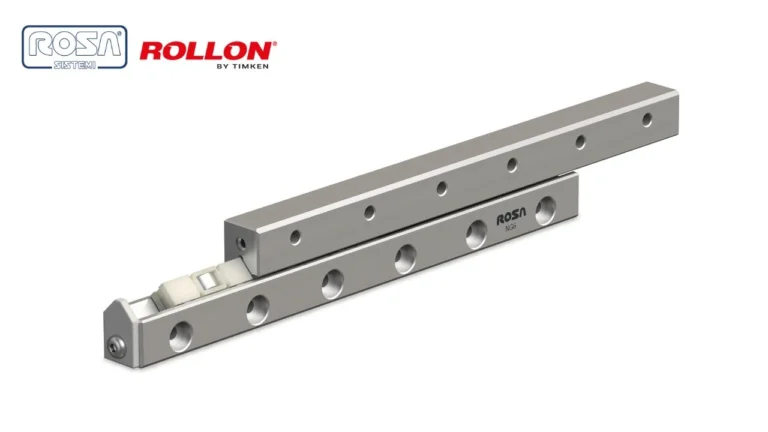
Another solution is the NG cross roller rail, which is designed to deliver especially high rigidity in a compact form factor. This makes it well suited for applications where installation space is limited but high performance is still required.
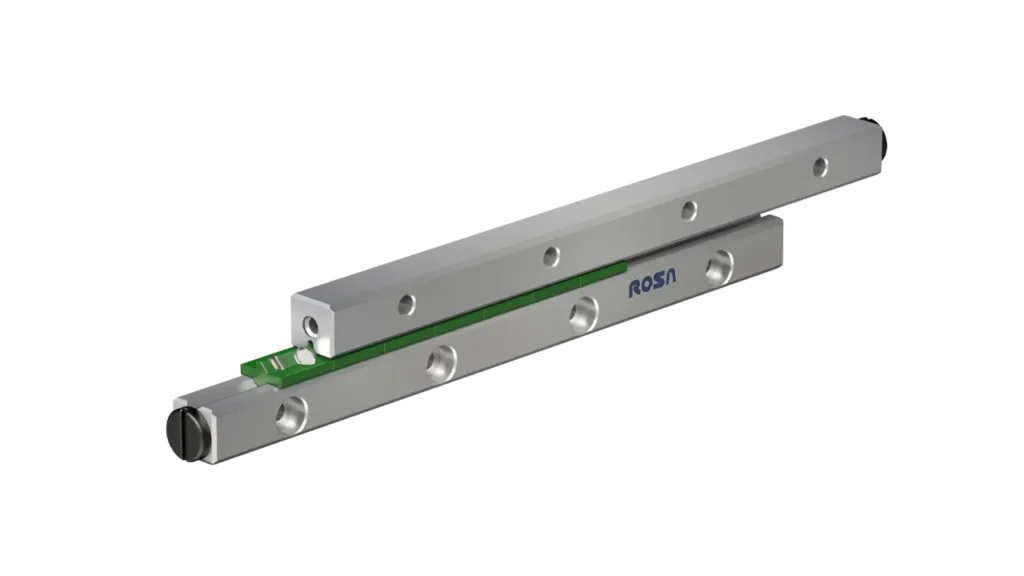
GR guides
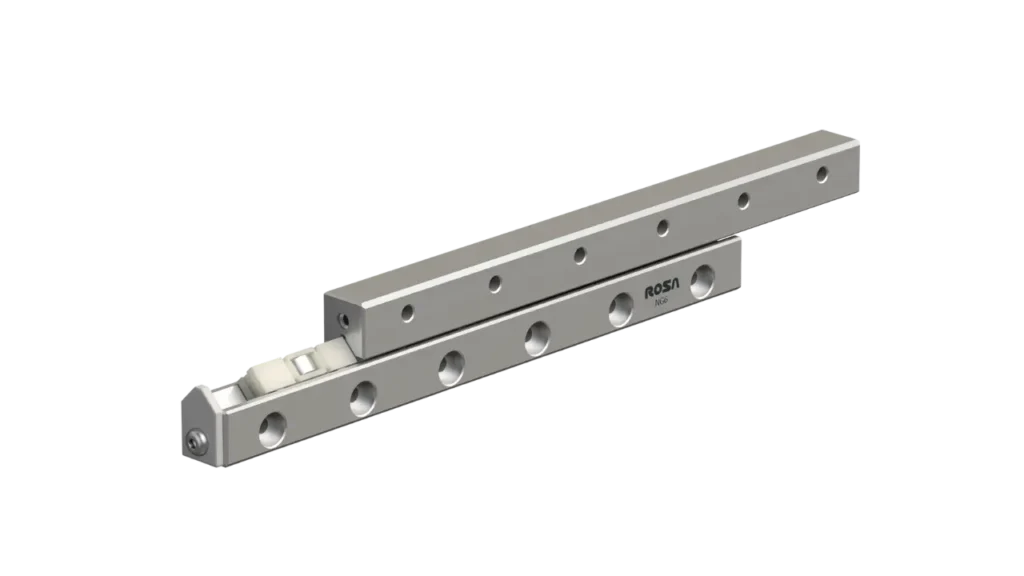
NG guides
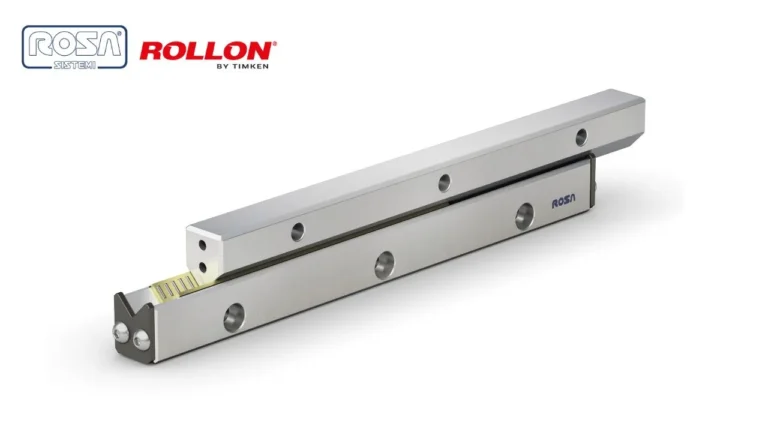
For even higher load ratings and rigidity, the RM RV needle roller guides are available. These guides are used in applications similar to those served by cross roller guides but are specifically selected when maximum stiffness and load capacity are required within the same footprint. Common examples include guides for EDM machines, grinding systems, welding equipment, and crimping or pressing machines. Various cage materials and roller configurations are available to meet specific application demands.
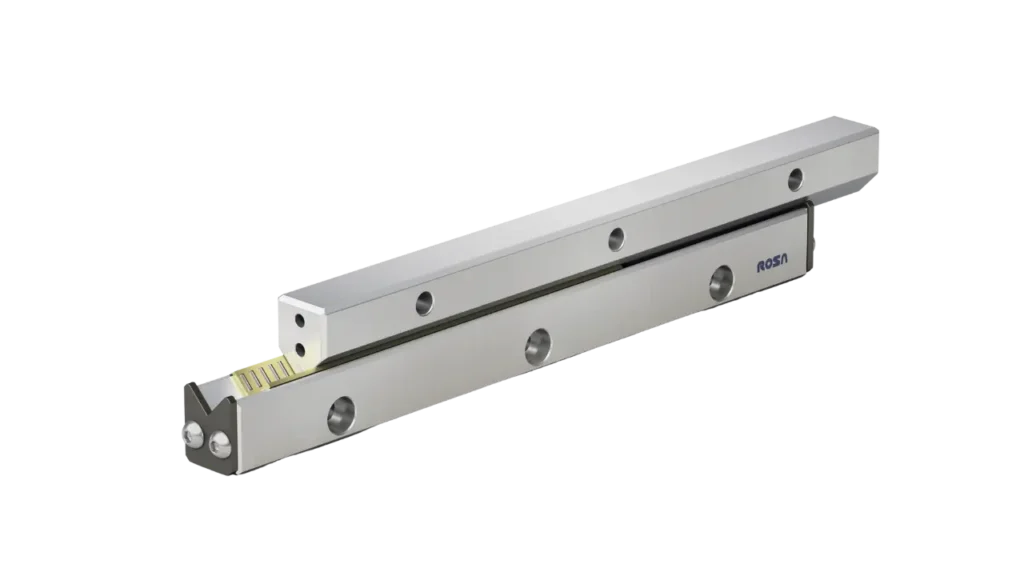
RM RV needle roller guide
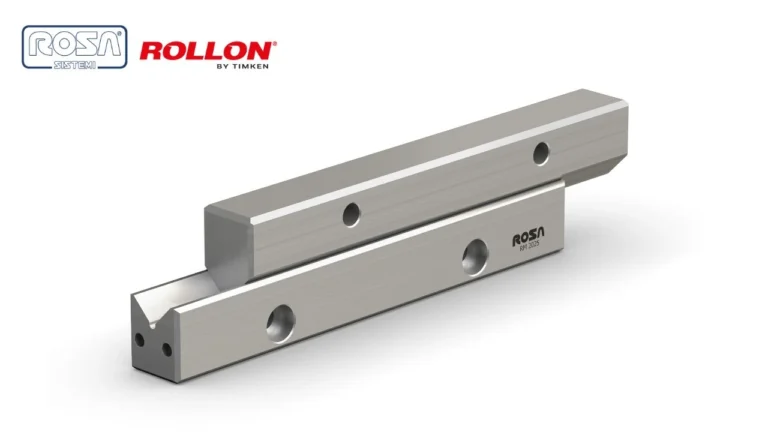
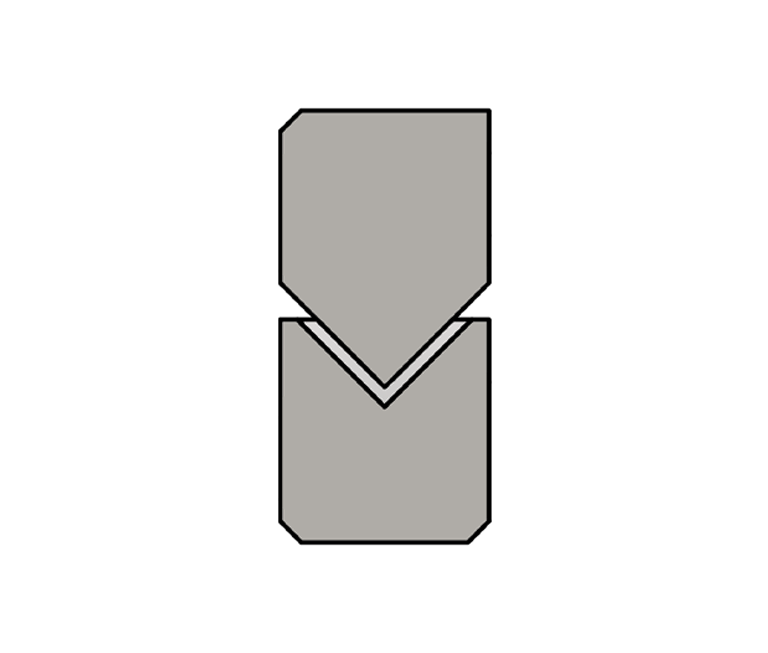
The portfolio also includes RM/RVA guides and M/V guides. Unlike the other solutions, these guides use full-contact antifriction material instead of bearing elements, offering an alternative approach for certain application requirements. They are typically used in low-speed applications that require maximum rigidity, such as substrate processing equipment, printing machines, and marble and glass processing machines.
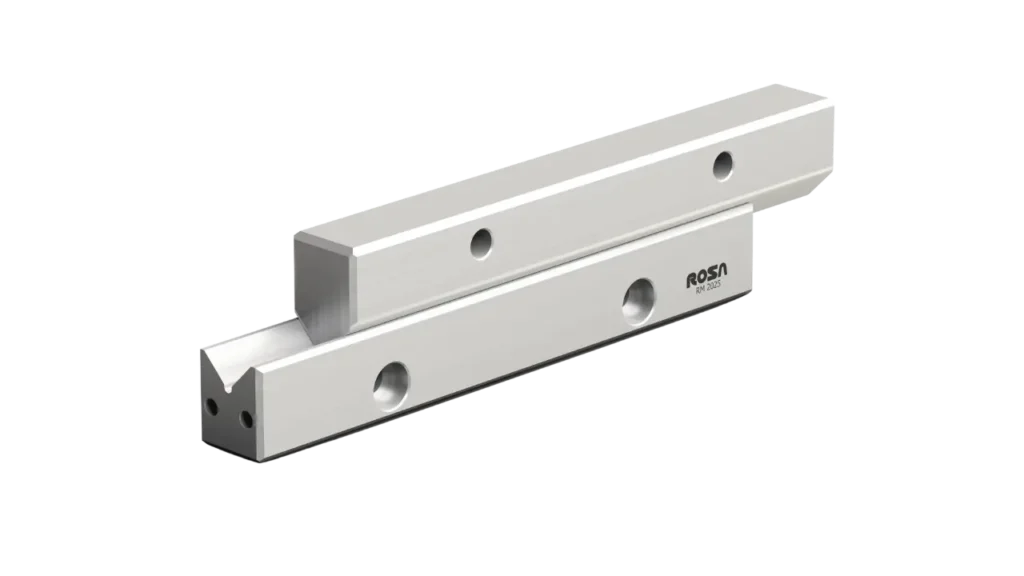
M/V and RM/RVA guides
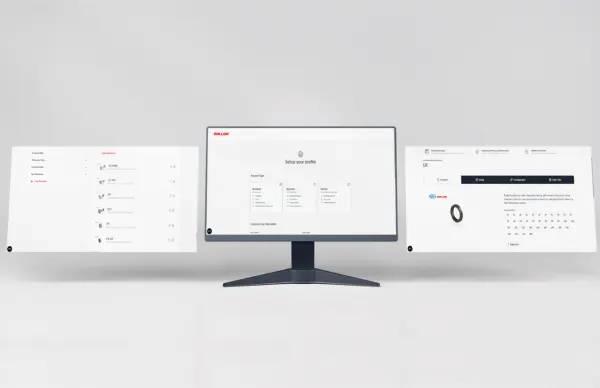
To identify the most suitable guide for their specific application, engineers can use the selection tools available at my.rollon.com.