
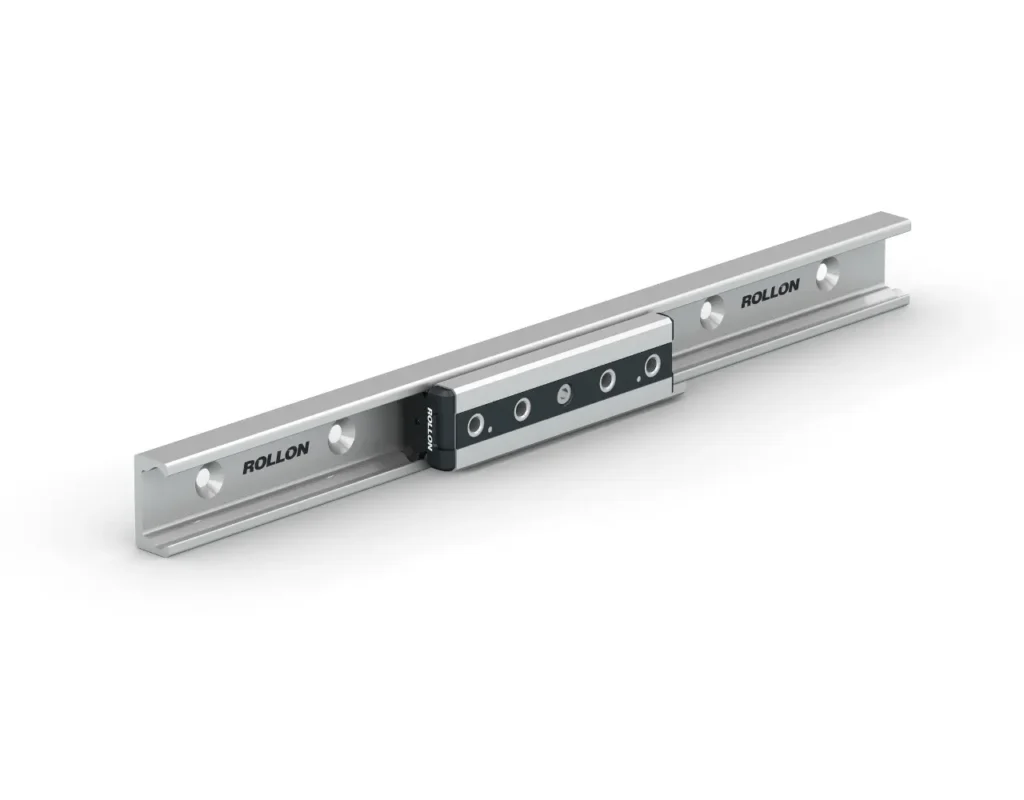
 Linear guides
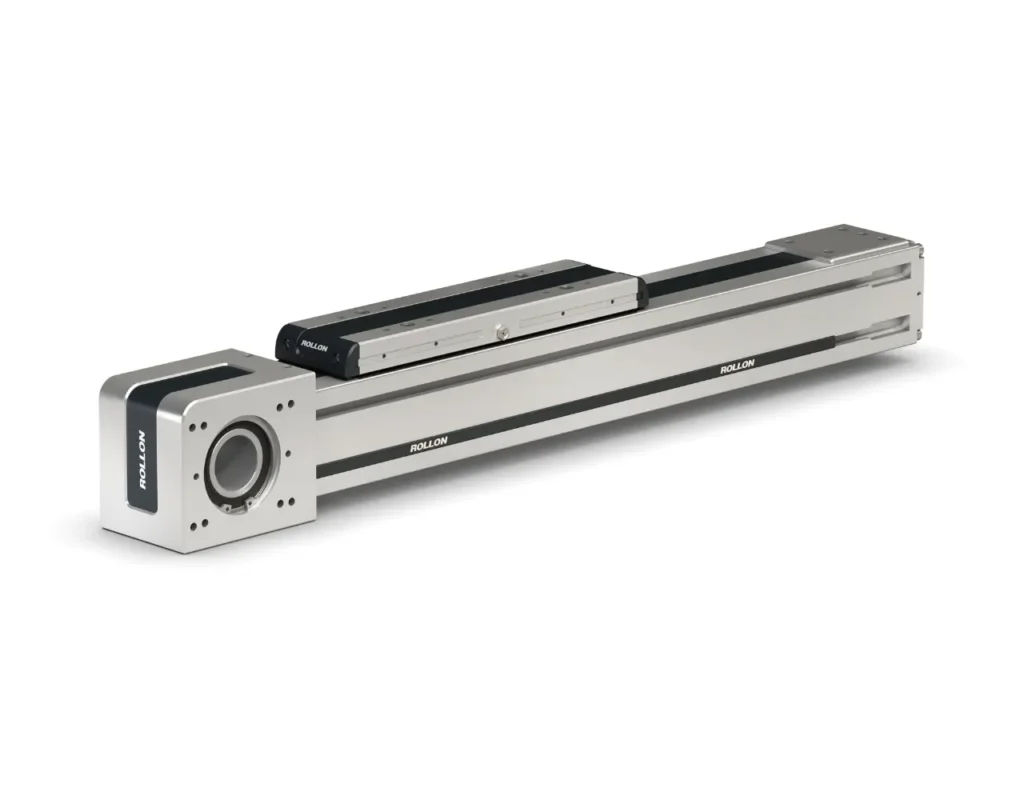 Linear actuators
 XP Xtrem Position
 Rod ends
 Telescopic rails
 Multi-axis
 XL Xtrem Load
 Spherical plain bearings
 Curved guides
 Robot transfer units
 XT Xtrem Transport
 Needle roller bearings
 Cam followers
 Circular systems
 Rollon RB
 Locknuts and rings
 Aerospace
 Contract & Building
 Electronics
 Food & Beverage
 Industrial machinery
 Healthcare
 Machine tool
 Material handling
 Packaging
 Railway
 Robotics & Automation
 Special Vehicles




















Contamination is one of the most critical factors influencing the performance and lifecycle of linear guides. In fact, not all guides react the same way when exposed to dirt, dust, liquids, or chemicals, which is why matching the guide type to the application environment is essential. In this article, we examine what contamination means in the context of linear motion systems, how it affects performance, and what design features help mitigate its impact.
In linear motion applications, contamination refers to any foreign material that increases friction along the guide’s bearing surfaces. This friction leads to uneven load distribution within the bearing. As contaminants accumulate, the risk of premature wear or even complete guide failure increases. For this reason, evaluating environmental exposure is a fundamental step when selecting a guide.
To simplify this assessment, contamination is typically classified into three main categories:
- Large particle contamination
- Fine particle contamination
- Liquid contamination and chemical contamination
Each category affects guide performance differently, and not every guide design is equipped to withstand every environment.
Large particle contamination
Large contaminant particles include sawdust, machining chips, weld spatter, and similar debris. Fortunately, these contaminants can often be managed effectively, provided the guide includes the appropriate sealing or scraping elements.
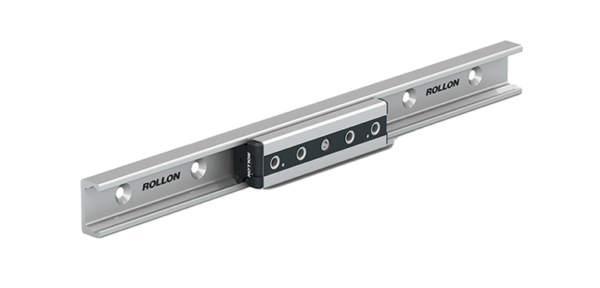
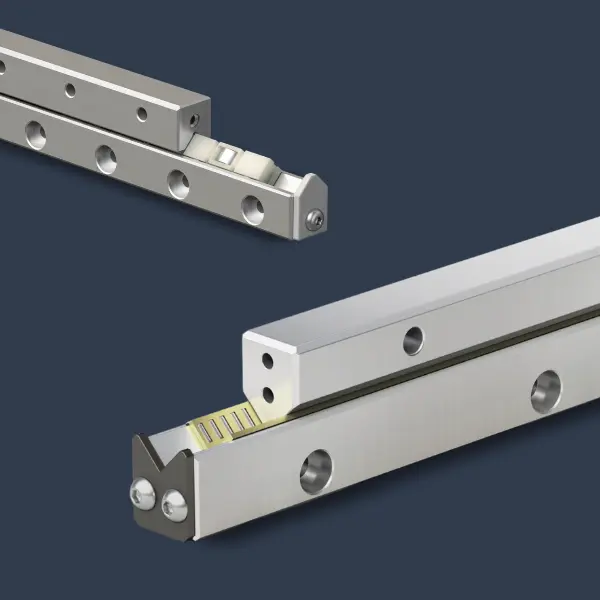
For example, Compact Rail carriages are engineered with wipers that direct larger contaminants away from the raceway as the carriage moves, as well as side seals that prevent debris from entering the internal bearing contact surfaces.
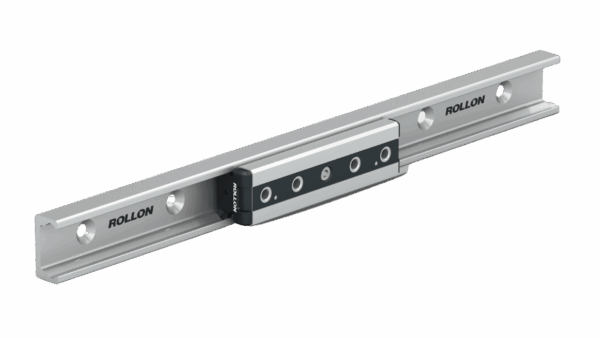
Profile rail guides like MG Rail can also be outfitted with scrapers and seals capable of protecting the rollers inside the guide from large particles. When properly configured, these solutions typically maintain good performance even in environments where debris is abundant.
Rollon® Compact Rail features wipers that clean the raceways.
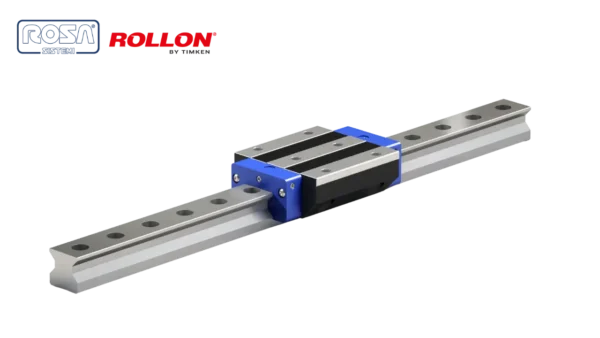
Rollon Rosa Sistemi’s MG Rail.
Fine particle contamination
Fine contamination includes materials such as very fine sand, ceramic dust, and fiberglass particles. Because these particles can bypass many standard seals and scrapers, they pose a more significant challenge, especially for guides with open, recirculating ball bearings.
In such environments, fully sealed roller bearings offer superior resistance. The roller bearings used in Compact Rail and X-Rail systems, for example, can tolerate fine particles on the raceway.
By contrast, guides with exposed bearing cages should be avoided whenever fine particulate exposure is expected.
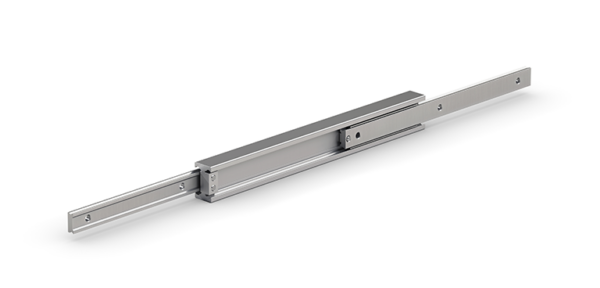
For telescopic applications operating in contaminated environments, Rollon’s full extension guides, such as TLN-P and TLAX, provide an effective alternative. In addition to sealed bearings, they include wipers that actively push contaminants out of the rail, making them highly suitable for harsh or particulate-dense applications.
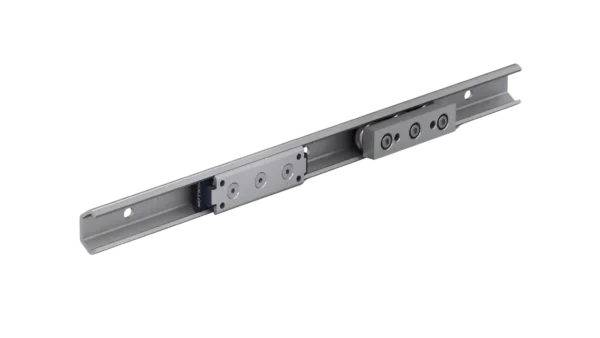
Rollon® X-Rail features fully sealed bearings.
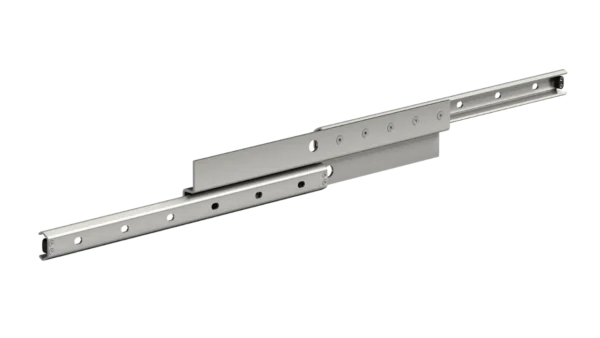
Rollon® TLAX full extension telescopic rail.
Liquid and chemical contamination
Environments involving saltwater, washdown procedures, or chemical exposure require a different approach. In these cases, material selection and surface treatment become key to ensuring durability.
Rollon offers multiple material and coating solutions tailored for these conditions, including:
- Full stainless-steel components, ideal for many corrosive or hygienic environments.
- Zinc-nickel or nickel chrome plating for outdoor or marine applications.
- Nickel plating for applications involving washdown chemicals (common in medical and food processing settings).
- Surface-hardened black nitrite finishing for high-wear environments requiring enhanced durability.
Choosing the right combination of materials and coatings helps protect the guide from corrosion, degradation, and premature wear caused by liquids or chemical exposure.
Selecting the right guide for your application
When contamination is a factor – whether from particles, liquids, or chemicals – the performance and lifespan of a linear guide depend heavily on selecting the proper configuration. Seal design, bearing type, and material selection all influence how well a guide will handle its environment.
If your application is likely to encounter any form of contamination, consulting a Rollon engineer can help ensure the linear guide is specified correctly from the start. Our engineering team can support you in evaluating environmental risks and determining the optimal guide solution for long-term reliability.
Get in touch with a Rollon engineer to select the best guide for your application.